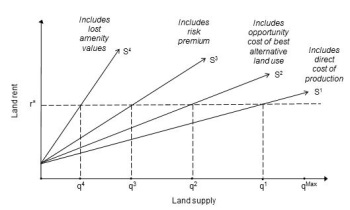
Dedicated production of biofuels has been a Holy Grail for the sector, but this study finds that this is unlikely.


Dedicated production of biofuels has been a Holy Grail for the sector, but this study finds that this is unlikely.
First, while these increases are eye-catching, insurers generally underpriced their plans when the marketplaces opened in 2014, and the current increases simply bring the premiums up to the level predicted when Congress debated the Affordable Care Act in 2009.According to the report, Congressional Budget Office projections from 2009 suggested average 2017 premiums of $5,538; HHS is projecting average premiums of $5,586. Indeed, premiums in many states are still below the cost of employer coverage.
Source: Don’t panic about rising ACA insurance premiums (Opinion) – CNN.com
A detailed discussion about the successes, failures, and intent of these two federal programs.
Source: What Trump and Clinton miss about clean coal and renewables subsidies | Utility Dive

This post seems particularly apt for the electricity industry. IOU CEOs typically are “executioners” not “visionaries,” and this is at the heart of their existential conumdrum.
What happens to a company when a visionary CEO is gone? Most often innovation dies and the company coasts for years on momentum and its brand. Rarely does it regain its former glory. Here’s why. Mi…
Source: Why Tim Cook is Steve Ballmer and why he still has his job at Apple • The Berkeley Blog

Paul Brown talks about how chasing “optimization” is a fruitless distraction, which I happen to agree with. We should be focused on exploring the consequences of different pathways and how to mitigate significant vulnerabilities.
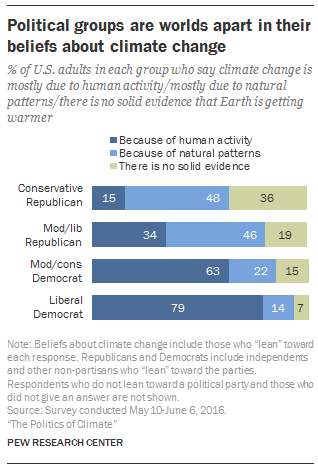
Republicans and Democrats demonstrate similar levels of scientific knowledge, but they have different trust levels for climate scientists and the media.
Source: 10 charts that explain America’s divide on energy and climate policy | Utility Dive
There’s one thing we all know: the Republican Party hates regulation. Republicans want to roll back some key regulations and make it a lot harder to pass new ones. But there’s a curi…
Source: Why Doesn’t the GOP Offer Alternative Solutions to Environmental Problems? | Legal Planet
The American Economic Journal: Applied Economics just published this article finding that a $1 cigarette tax reduces childho0d sick days at school by 10%. This demonstrates a strong link between second-hand smoke and public health, and how responsive cigarette demand is to a tobacco tax.
| (6) Does Early Life Exposure to Cigarette Smoke Permanently Harm Childhood Welfare? Evidence from Cigarette Tax Hikes |
| David Simon |
| Evidence suggests that excise taxes on tobacco improve fetal health. However, it remains unknown if smoke exposure in early life causes lasting harm to children. I find that in utero exposure to a dollar increase in the state cigarette tax causes a 10 percent decrease in sick days from school and a 4.7 percent decrease in having two or more doctor visits. I present additional evidence for decreases in hospitalizations and asthma. This supports the hypothesis that exposure to cigarette smoke in utero and infancy carries significant medium-term costs, and that excise taxes can lead to lasting intergenerational improvements in well-being. |
| Full-Text Access | Supplementary Materials |
 In one version of the future utility-customer relationship that such a grid would make possible, customers might have a fixed monthly bill and long-term contract not unlike a cell phone service and the utility would provide, in addition to electricity, a suite of distributed resources, Julia Hamm, president of the Smart Electric Power Alliance (SEPA) said at a recent conference.In that future, more energy-smart consumers could choose to shop for private sector vendors to provide the solar, storage, and smart technologies — and they would be able to, Hamm said, because any vision of the electricity sector’s future should include choice.“We want this future,” Southern California Edison (SCE) President Ron Nichols said of Hamm’s description at the Solar Power International Conference. “We need to have a grid that can make that work.”
Source: How Southern California Edison’s new rate case would transform the grid | Utility Dive
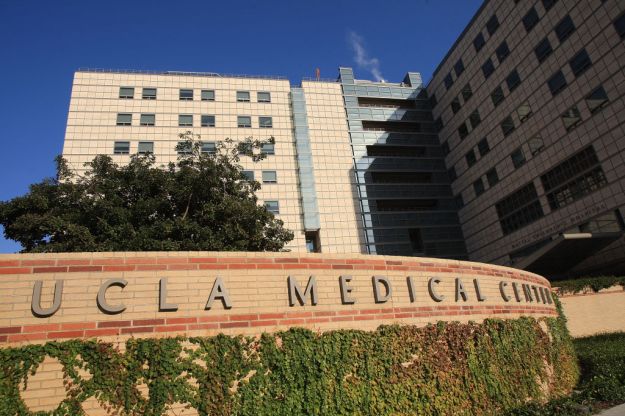
By Hannah Guzik The majority of health care expenses in California are paid for with public funds, a new study released Wednesday reports. The research counters the popular belief that corporations and individuals bear the brunt of health care costs. Researchers from the UCLA Center for Health Policy Research found that taxpayer dollars will pay […]
Source: Most Health Care Costs in California Are Paid With Public Funds – California Health Report
All Things Solar and Electric
Musings from M.Cubed on the environment, energy and water
This blog is not necessarily about biking. It's about life that is lived locally, at a human pace.
Energy, Environment and Policy
Musings from M.Cubed on the environment, energy and water
Examining State Authority in Interstate Electricity Markets
Musings from M.Cubed on the environment, energy and water
Musings from M.Cubed on the environment, energy and water
Economic insight and analysis from The Wall Street Journal.
Musings from M.Cubed on the environment, energy and water
Musings from M.Cubed on the environment, energy and water
A few thoughts from John Fleck, a writer of journalism and other things, living in New Mexico
Musings from M.Cubed on the environment, energy and water
Musings from M.Cubed on the environment, energy and water
Musings from M.Cubed on the environment, energy and water
Tips and tricks on programming, evolutionary algorithms, and doing research
Musings from M.Cubed on the environment, energy and water
A blog about water resources and law
Musings from M.Cubed on the environment, energy and water
 Economics Outside the Cube