Author Archives: Richard McCann

Unknown's avatar

About Richard McCann

Partner in M.Cubed, an economics and policy consulting firm.

Community choice spreading across California

Yolo County and the City of Davis became the latest community to approve a CCE (for community choice energy, an alternative moniker to the legalistic community choice aggregation). I sat on the advisory committee assessing options and the business case is strong for the viability of this option. This is the leading edge of a wave of CCEs across California. The combination of market conditions, falling renewable power costs, recognition of changes in the electricity market, and dissatisfaction with the incumbent utilities is pushing broad community coalitions to take the leap.
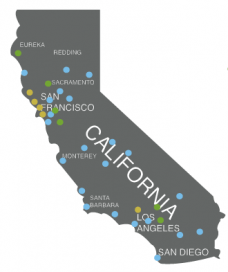
ca-cca-map-solo-10-10-16-e1476219431587To date three communities have operating CCE’s, with MCE starting first in 2010. MCE is made up of not only Marin County, but also Napa County, and the City of Richmond and Benecia. It also is considering adding new members. It currently has 17 voting communities. Sonoma Clean Power followed in 2014, and is considering adding Lake and Mendocino counties.  The City of Lancaster started in late 2015 in SCE’s service territory. Peninsula Clean Energy, composed of San Mateo County and its cities, kicked off service in 2016.  In addition, San Francisco has approved a CCE but has had various political barriers to getting off the ground.

Here’s a couple websites that show maps and lists of what counties and cities are pursuing CCAs (the lists are slightly different).


Other communities in the midst of either approving or implementing new CCEs include:

Alameda County

Contra Costa County – considering joining Alameda or MCE, or going it alone

Humboldt County as Redwood Coast Energy Authority – considering joining SCP or going alone

South Bay Cities of Los Angeles County as South Bay Clean Power

Los Angeles County

Monterey, Santa Cruz and San Benito Counties and their cities as Monterey Bay Community Power

Riverside and San Bernardino Counties – issued RFP for joint study

San Diego County

City of San Diego – issued RFP for a study

City of Solana Beach

Santa Clara County and 11 cities as Silicon Valley CCE Partners – starting late 2016

City of San Jose – exploring joining SVCCEP or going alone

Santa Barbara CountySan Luis Obispo County and Ventura County – released study on feasibility and options

City of Walnut Creek – considering joining with Contra Costa or going alone


All of this activity has serious implications for IOU purchasing and contract management going forward, CPUC regulation and overall procurement transparency. The IOUs and CPUC have operated in black box to date claiming that confidentiality is necessary to prevent market manipulation. Yet with all of these CCEs likely operating as open books, everyone will have the market information that the IOUs claim is so vital to protect. This is likely to open up IOU PPAs to greater scrutinty–attention that neither the IOUs or the CPUC probably want.

Reaction to Is “Community Choice” Electric Supply a Solution or a Problem?

Severin Borenstein at the Energy Institute @ Haas wrote a good summary of the issues around community choice aggregation.

Source: Is “Community Choice” Electric Supply a Solution or a Problem?

I am on the City of Davis’ Community Choice Energy Advisory Committee and have been looking at these issues closely for a year. I had my own reactions to this post:

First, in California the existing and proposed CCEs (there are probably a dozen in process at the moment to add to the 3 existing ones) universally offer a higher “green” % product than the incumbent IOU, most often a 50% RPS product. And although MCE and SCP started out relying on RECs of various types to start out, they all are phasing out most of those by 2017. I think most will offer a 100% product as well.

The reason that these CCE’s are able to offer lower rates than the IOUs at a lower RPS is that the IOUs prematurely contracted long for renewables in anticipation of the 2020 goal. In fact, the penalty for failing to meet the RPS in any given year is so low, that the prudent strategy by an IOU would have been to risk being short in each year and contract for the year ahead instead of locking in too many 20+ year PPAs. At least one reason why this happened is that the IOUs require confidentiality by any reviewers and no connections to any competing procurement decisions. As a result the outside reviewers couldn’t be up to speed on the rapidly falling PPA prices. The CPUC has made a huge mistake on this point (and the CEC has rightfully harassed the CPUC over this policy.)

CCE’s also offer the ability to craft a broader range of rate offerings to customers–even flat 20 year rates that can compete with solar roofs on the main issue that customers really care about: price guarantees. In addition, CCE’s are more likely to be to nimbly adjust a rapidly changing utility landscape. CCE’s are much less likely to care about falling loads because their earnings aren’t dependent on continued service.

It’s also to recognize the difference between local government general services (e.g., safety and public protection, social services, regulation, etc.) and enterprise services (e.g., utilities of all sorts). In general, the latter are as efficient as IOUs (except LADWP which illustrates the INefficiency created by overlarge organizations). So one can’t make a broad generalization about local government problems and how they might apply in this situation. The fact is that almost all of the existing and new CCEs are or will be JPAs, which are often even leaner. (Lancaster is the exception.)

Finally, Severin made this statement:

“Whatever regulatory mandates, managerial mistakes, or incompetence occurred in the past, customers switching to a CCA should not be allowed to shift their share of costs from past decisions onto other ratepayers.”

I have to disagree to a certain exent with this statement. Am I forced to pay for the past incompetencies of GM or GE or any other corporation? Yes, utilities have a higher assurance of return on their investments, but no where is it written that it is “ironclad.” Those utilities had an assurance first as the sole legal provider and then as the provider of last resort, but that’s eroding. In California, the CTC was a political deal to get the IOUs out of the way. The fact is in California that the CPUC abrogated its responsibility to oversee these decisions on behalf of ratepayers with the encouragement of the IOUs. If the IOUs want to retain their customers, then they should be forced to compete with the CCEs (and DA LSEs.) It’s time to reopen this matter.

And to add a bit more:

The logic of this statement is that ANY customer who leaves the system, including moving to another area, state or nation, should have to continue to pay these stranded costs. Why should we draw the line arbitrarily at whether they happen to still get distribution services even though the generation services have been completely severed? Particularly if someone moves from say, San Francisco to Palo Alto, that customer still relies on PG&E’s transmission system and its hydro system for ancillary services. Why not charge that Palo Alto customer a non-by-passable charge? And why shouldn’t it be reciprocal? Relying on “political practicality” is not an answer. Either ALL customers are tethered forever, or no customers are required to meet this obligation.


Thinking outside the box on the CPUC’s future

3peev_t658

Assemblymember Mike Gato (D-LA) is proposing a constitutional amendment to dissolve the CPUC–blowing up the box! The CPUC currently regulates energy utilities, telcom, transportation and water. That’s a tall order to ask five people to competently understand all of those arenas. And on the flip side, many have recognized that the state has too many “cooks in the kitchen” regulating energy, and it’s only gotten worse with increased climate change regulation. The CPUC hasn’t done much to burnish its reputation with the scandal of Mike Peevey’s “rulings for sale” and the inadequate responses to the San Bruno and Porter Ranch disasters. Closing up shop and starting over may be the best solution.

Getting to the harder question about stranded assets

diablocanyon

John Farrell at the Institute for Self-Reliance argues that existing utility fossil-fuel plants should not be given “stranded assets” status. While his argument about “stranded assets” makes sense from a society wide economic sense, it doesn’t conform with the utility regulation world in which “stranded assets” is actually relevant. Having gone through California’s restructuring and competitive transition charge (CTC) (I’m the only person outside of the utilities to conduct a complete accounting of the CTC collection through 2001), it’s all about what’s on the utility’s books and what the regulatory commission agrees is an acceptable transfer of risk. And based on what happened with Diablo Canyon in 1996 (the correct treatment would have recognized that PG&E had collected its entire investment at the regulated rate of return by 1998—I did that calculation too), it’s not promising.

So I suggest focusing on the shareholder/ratepayer risk sharing arrangement and how that should be changed in the face of the oncoming utility 2.0 transformation as a more fruitful path. We have to change the underlying paradigm first. That there are benefits from retiring generation assets is not a hard argument to win—that was the case in 1996 in California. The harder one is that the past regulatory compact should be changed and that it won’t somehow impact future investment in the distribution utility.

Ideas on adopting world carbon prices

Two news items showed up today on the idea of adopting a worldwide carbon price to reduce GHG emissions. The general idea is to use one of three approaches: 1) world cap & trade allocations (which has been the underlying notion in negotiations so far); 2) setting a specific carbon price or tax through treaty; or 3) using trade tariffs by a coalition of participating nations to incent non-participating ones to control their emissions. There is evidence that pricing carbon is effective in reducing emissions.

The U.S. Secretary of Energy called for a world carbon price implemented through one of the first two methods listed here.

The new American Economics Review has an article that shows that a trade tariff regime imposed by a coalition can induce other nations to control their emissions.

The Strategic Value of Carbon Tariffs
Christoph Böhringer, Jared C. Carbone and Thomas F. Rutherford
We ask whether the threat of carbon tariffs might lower the cost of reductions in world carbon emissions by inducing unregulated regions to adopt emission controls. We use a numerical model to generate payoffs of a game in which a coalition regulates emissions and chooses whether to employ carbon tariffs against unregulated regions. Unregulated regions respond by abating, retaliating, or ignoring the tariffs. In the Nash equilibrium, the use of tariffs is a credible and effective threat. It induces cooperation from noncoalition regions that lowers the cost of global abatement substantially relative to the case where the coalition acts alone. (JEL D58, F13, F18, H23, Q54, Q58)
Full-Text Access | Supplementary Materials

Preserving biological diversity in Costa Rica

We just returned from a trip to Costa Rica, including the cloud forest in Monteverde. We even got to see the wonderful Quetzal (see above) and hear the Three-wattled bellbird. That region is increasingly dependent on eco-tourism to support it biological reserves. Most of those are privately owned, with the national parks appearing to be more “rural preservation” zones than the ecological protection areas that we have in the U.S. The question is whether relying so heavily on eco-tourism is a desirable and sustainable path for preserving the biological diversity in such a resource-rich area?

Tourism can have a big environmental footprint from travel modes as well as pushing the local labor force from productive agriculture to service jobs. Already, 300,000 people annually visit a community with 5,000 residents. Several people in Monteverde mentioned that they were reluctant to support improving road access (which is difficult now) because it could bring in more visitors, particularly cruise-ship buses that are typically not as interested in a “close to nature” experience.

One option is to train the workforce to provide the means of maintaining and observing the local ecosystem. This could include both nature guides for eco-tourists, scientific observation and analysis, and habitat restoration.

Another question is whether the local workforce should be trained to transform the habitat to match the climate change that is likely to occur in the region? Human activities such as cattle grazing and crop and forest cultivation tend to impede natural transformations that might mitigate climate change impacts in the local ecology. We might have to acknowledge that existing local habitats will change and certain species will disappear, but that we should move to substitute appropriate habitat for other species to escape to from their disappearing habitat.

A brief reply to “Real” Electricity Still Comes from the Grid

Source: “Real” Electricity Still Comes from the Grid

Catherine Wolfram at UC Berkeley posted about their paper looking at costs of distributed energy systems in Kenya and concluding that these were too expensive for households compared to connecting to the grid. However, the paper came under immediate criticism.

Here’s my thoughts based on her representation of the paper’s findings, some of which are mirrored by other commentators:

First, the paper talks about costs on one side, but doesn’t put them in perspective to the alternatives. The post lists the cost of the individual systems, but not the expected connection costs to the grid.

Further the paper takes a static look at current costs and doesn’t account for the differential trends in the sets of costs for an home-based system versus connecting to the grid. The latter costs can be expected to be steady or even rising, while it’s well known that both solar and storage costs have fallen rapidly.

Different scales of “grid” also are important. For example, solar projects show scale economies up to about 3 MW but then modular construction flattens the per kW cost. A village microgrid separate from a national central grid may be quite cost competitive.

Finally, the paper appears to lump large hydro in with other utility-scale renewables. The environmental (and economic development) record for large-scale hydro projects in the developing world is dubious at best. There is evidence of significant methane emissions from tropical reservoirs. Habitat is destroyed and poorly designed projects don’t deliver expected benefits. Hydro is by far the largest energy supplier on these grids, and they may be little better than coal from an overall environmental perspective.

Environmental impacts of pot

I saw this interesting RFP come in:

The California Department of Food and Agriculture requires the services of an environmental consulting firm to prepare an environmental impact report for its Medical Cannabis Cultivation Program.

Awareness has increased about how marijuana cultivation has affected water diversion, pesticide use, energy use and forest habitat. The results of this study will be interesting.

Are the benefits of an RPS correct?

Lawrence Berkeley Lab released a report estimating the economic benefits from the renewable portfolio standards (RPS) around the U.S. Two surprising findings were:

  • ratepayers saved up to $1.2 billion in wholesale power costs (on top of a $1.3-$3.7 billion reduction in natural gas costs from reduced overall demand); and
  • air quality benefits were about equal to GHG reductions in economic value.

Both of these claims require a deeper review because they run contrary to previous analyses.

Based on PG&E’s Power Charge Indifference Adjustment (PCIA), the renewables contracts that it holds are increasing its rates by almost 2 cents per kilowatt-hour. It is only recently that renewable contract prices have started approaching conventional resource costs, so it’s hard to understand how an RPS could have already reduced electricity rates. (I do see that this will eventually be the case.)

Typically the emission reduction benefits from GHG reductions are several multiples of those from criteria air pollutants (e.g., NOx and volatile organic compounds (VOC or ROG) that produce ozone; particulate matter (PM 2.5)). For example, ClimateCost has issued studies estimating reduced energy impacts and health benefits compared to air quality benefits that show much larger GHG benefits.

A real game changer in EVs?

General Motors announced the new Chevy Bolt with a 200-mile range at $30,000 after federal incentives (and less with state incentives). This range works for most households as a primary car (versus a commuter with a 40-50 mile range) and it’s in the price range of many other alternatives.

The question is whether EVs are environmentally beneficial yet in the eastern U.S. Car technology may be getting ahead of the electricity grid.