Tag Archives: climate change

Maybe time to look for High Speed Rail alternatives?

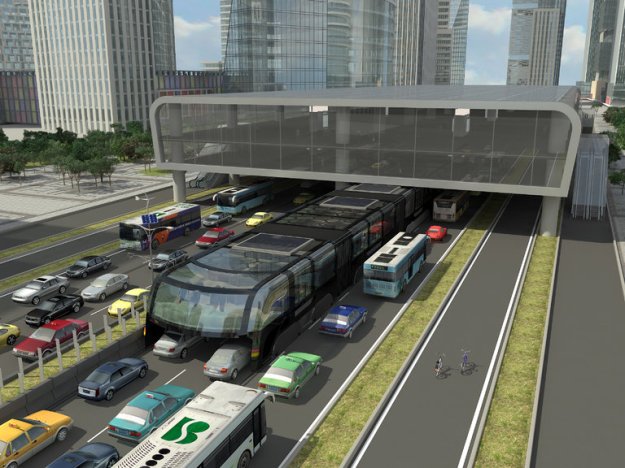
High speed rail (HSR) may not be the best means to moving people quickly from San Francisco to Los Angeles–it looks like a 20th century solution to a 21st century problem. I’ve written written about how electric vehicles will diminish the projected GHG emission reductions, and may be an effective alternative. Now comes a Chinese-designed super bus27chinabus01-master768 that can use the same I-5 lanes simultaneously with cars. (See the video in the link above.) The Dutch have developed a high-speed electric bus that also can use I-5 at little added cost.

And now comes word that the auction of greenhouse gas (GHG) allowances by the State fell well below forecasts. Due to how HSR is funded out of that allowance fund, HSR’s share will fall by 98% to $2.5 million. Given that the state still has not attracted any private investment, which is a necessity to make this go, it may be time to rethink solutions.

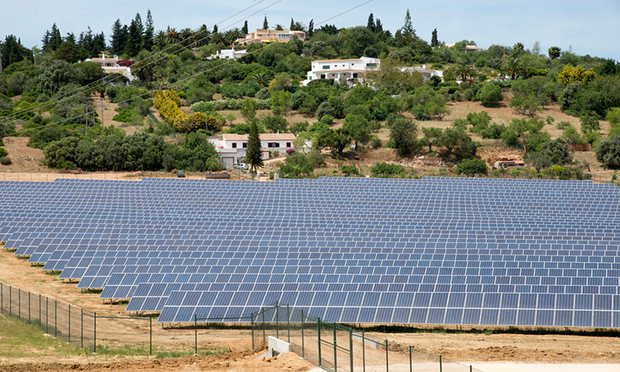
Portugal shows 100% renewables is feasible

Portugal just ran its entire grid for 107 straight hours on 100% renewables. That’s four and a half days. The country now gets about 48% of its energy from green power.5999

Community choice spreading across California

Yolo County and the City of Davis became the latest community to approve a CCE (for community choice energy, an alternative moniker to the legalistic community choice aggregation). I sat on the advisory committee assessing options and the business case is strong for the viability of this option. This is the leading edge of a wave of CCEs across California. The combination of market conditions, falling renewable power costs, recognition of changes in the electricity market, and dissatisfaction with the incumbent utilities is pushing broad community coalitions to take the leap.
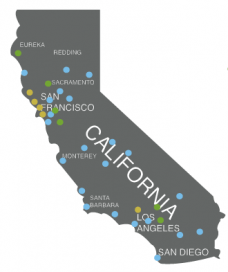
ca-cca-map-solo-10-10-16-e1476219431587To date three communities have operating CCE’s, with MCE starting first in 2010. MCE is made up of not only Marin County, but also Napa County, and the City of Richmond and Benecia. It also is considering adding new members. It currently has 17 voting communities. Sonoma Clean Power followed in 2014, and is considering adding Lake and Mendocino counties.  The City of Lancaster started in late 2015 in SCE’s service territory. Peninsula Clean Energy, composed of San Mateo County and its cities, kicked off service in 2016.  In addition, San Francisco has approved a CCE but has had various political barriers to getting off the ground.

Here’s a couple websites that show maps and lists of what counties and cities are pursuing CCAs (the lists are slightly different).


Other communities in the midst of either approving or implementing new CCEs include:

Alameda County

Contra Costa County – considering joining Alameda or MCE, or going it alone

Humboldt County as Redwood Coast Energy Authority – considering joining SCP or going alone

South Bay Cities of Los Angeles County as South Bay Clean Power

Los Angeles County

Monterey, Santa Cruz and San Benito Counties and their cities as Monterey Bay Community Power

Riverside and San Bernardino Counties – issued RFP for joint study

San Diego County

City of San Diego – issued RFP for a study

City of Solana Beach

Santa Clara County and 11 cities as Silicon Valley CCE Partners – starting late 2016

City of San Jose – exploring joining SVCCEP or going alone

Santa Barbara CountySan Luis Obispo County and Ventura County – released study on feasibility and options

City of Walnut Creek – considering joining with Contra Costa or going alone


All of this activity has serious implications for IOU purchasing and contract management going forward, CPUC regulation and overall procurement transparency. The IOUs and CPUC have operated in black box to date claiming that confidentiality is necessary to prevent market manipulation. Yet with all of these CCEs likely operating as open books, everyone will have the market information that the IOUs claim is so vital to protect. This is likely to open up IOU PPAs to greater scrutinty–attention that neither the IOUs or the CPUC probably want.

Preserving biological diversity in Costa Rica

We just returned from a trip to Costa Rica, including the cloud forest in Monteverde. We even got to see the wonderful Quetzal (see above) and hear the Three-wattled bellbird. That region is increasingly dependent on eco-tourism to support it biological reserves. Most of those are privately owned, with the national parks appearing to be more “rural preservation” zones than the ecological protection areas that we have in the U.S. The question is whether relying so heavily on eco-tourism is a desirable and sustainable path for preserving the biological diversity in such a resource-rich area?

Tourism can have a big environmental footprint from travel modes as well as pushing the local labor force from productive agriculture to service jobs. Already, 300,000 people annually visit a community with 5,000 residents. Several people in Monteverde mentioned that they were reluctant to support improving road access (which is difficult now) because it could bring in more visitors, particularly cruise-ship buses that are typically not as interested in a “close to nature” experience.

One option is to train the workforce to provide the means of maintaining and observing the local ecosystem. This could include both nature guides for eco-tourists, scientific observation and analysis, and habitat restoration.

Another question is whether the local workforce should be trained to transform the habitat to match the climate change that is likely to occur in the region? Human activities such as cattle grazing and crop and forest cultivation tend to impede natural transformations that might mitigate climate change impacts in the local ecology. We might have to acknowledge that existing local habitats will change and certain species will disappear, but that we should move to substitute appropriate habitat for other species to escape to from their disappearing habitat.

Are the benefits of an RPS correct?

Lawrence Berkeley Lab released a report estimating the economic benefits from the renewable portfolio standards (RPS) around the U.S. Two surprising findings were:

  • ratepayers saved up to $1.2 billion in wholesale power costs (on top of a $1.3-$3.7 billion reduction in natural gas costs from reduced overall demand); and
  • air quality benefits were about equal to GHG reductions in economic value.

Both of these claims require a deeper review because they run contrary to previous analyses.

Based on PG&E’s Power Charge Indifference Adjustment (PCIA), the renewables contracts that it holds are increasing its rates by almost 2 cents per kilowatt-hour. It is only recently that renewable contract prices have started approaching conventional resource costs, so it’s hard to understand how an RPS could have already reduced electricity rates. (I do see that this will eventually be the case.)

Typically the emission reduction benefits from GHG reductions are several multiples of those from criteria air pollutants (e.g., NOx and volatile organic compounds (VOC or ROG) that produce ozone; particulate matter (PM 2.5)). For example, ClimateCost has issued studies estimating reduced energy impacts and health benefits compared to air quality benefits that show much larger GHG benefits.

A real game changer in EVs?

General Motors announced the new Chevy Bolt with a 200-mile range at $30,000 after federal incentives (and less with state incentives). This range works for most households as a primary car (versus a commuter with a 40-50 mile range) and it’s in the price range of many other alternatives.

The question is whether EVs are environmentally beneficial yet in the eastern U.S. Car technology may be getting ahead of the electricity grid.

The shaky foundation of benefit-cost analysis

A post by Tim Brennan at RFF on the uncertain foundations of benefit-cost analysis. (Another RFF post explores the question of whether policies should influence preferences.) The bottom line: that we can’t rely on a cut-and-dried economic analysis to define the “most efficient” policy action.

His conclusion is that we need to turn back to policymakers to decide, rather than relying on the “high priests” of economists:

The best alternative may be to use a fair and open democratic process to choose those who would change (or ignore) revealed preferences. This sounds more radical than it is; we do it all the time. We elect officials who directly or indirectly make choices according to noneconomic values based on ethical rights or distributive justice. Moreover, we also cannot forget that though economics takes preferences as given, they have to come from somewhere. Manipulating preferences is already part of public policy, most notably using education to inculcate preferences to be good citizens as well as to acquire useful skills. Although the puzzles mentioned here are real, we may not have the choice to ignore them, much as we might prefer to do so.


Is high speed rail the right answer for reducing GHG emissions?

I’m not the only one asking whether California’s High Speed Rail (HSR) project is the best way to reduce climate change risk. Dick Startz from UC Santa Barbara confirmed in the LA Times my observation that creating an electric vehicle through-way along I-5 probably can serve the same purpose for much less cost, while delivering GHG reductions much sooner.

As I pointed out, the HSR GHG reduction analysis incorrectly assumes that the mix of motor vehicles will remain gasoline-dominated past 2030. Even an updated analysis cited by HSR proponents ignores the likely penetration of non-hybrid EVs required to meet the state’s emission reduction goals (prepared in a different study by UC Berkeley–shouldn’t a university more fully coordinate it’s related research?) Shouldn’t the HSR Authority be coordinating it’s studies with the planning parameters being used by the Air Resources Board in preparing its GHG reduction plans? Other studies have shown the HSR is not particularly cost effective.

Widespread and effective charging networks are being developed that makes a high speed EV corridor feasible. Access to such a corridor might even encourage EV diffusion. As Startz writes, we should be looking for solutions from this century rather than the last.


Reblog: Leaking Coal to Asia

Maximillian Auffhammer at UC’s Energy Institute @ Haas focuses on the issue of exporting coal from the Port of Oakland, but he turns to the issue I highlighted recently–the path to accomplishing environmental objectives should travel through compensating those who are worse off from such policies.

Source: Leaking Coal to Asia

A political-economic analysis of the Red State-Blue State dichotomy on climate change policy

Matthew Kahn at UCLA lists his research addressing why voters and politicians in low-energy cost / high-carbon emitting areas oppose GHG reduction policies. He shows how protecting the status quo is in their interests, including for lower-income suburban dwellers. Proponents of climate change policies should consider how to compensate the range of “losers” from adopting these policies. Using carbon tax revenues to offset other taxes or as income-based rebates is one type of solution. I’ve pointed out previously that ignoring the need to compensate those who have reduced welfare from a policy choice both improves economic efficiency and reduces political opposition.