By Anya McCann, COOL Cuisine
Altering your diet can alter the climate.


By Anya McCann, COOL Cuisine
Altering your diet can alter the climate.
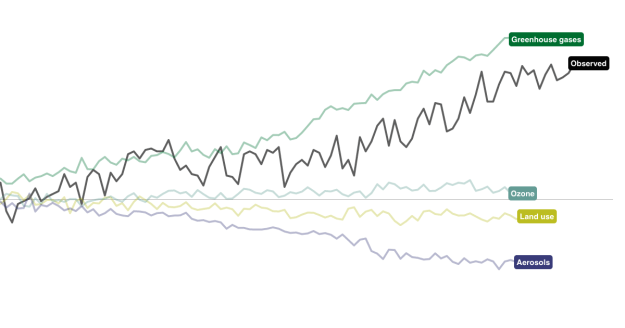
An interesting presentation separating about a dozen factors, natural and human.
Source: What’s Really Warming the World? Climate deniers blame natural factors; NASA data proves otherwise

Former French President Sarkozy suggested that if the U.S. pulled out of the Paris Climate Accord, that the EU impose carbon tariffs on U.S. goods. Many economists have suggested that this may be the best solution to gaining collected global action. So perhaps Trump’s win will actually further action on climate change rather than delay it.
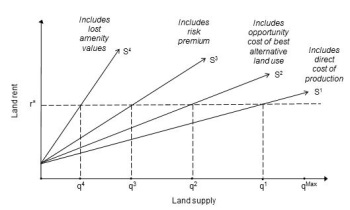
Dedicated production of biofuels has been a Holy Grail for the sector, but this study finds that this is unlikely.
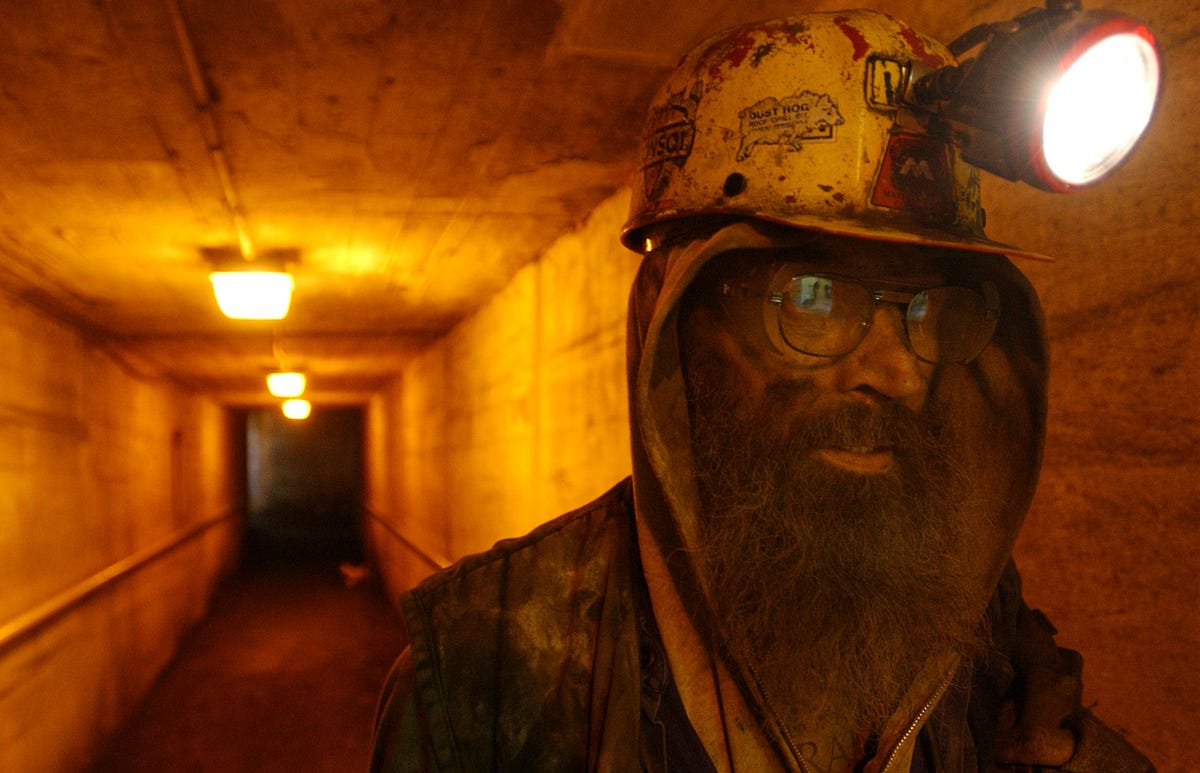
An interesting discussion about the failures and lessons for broad scale retraining programs.
My own thought is that we need to buy out the homes of displaced workers at the higher of either their purchase cost or the assessed value to facilitate moving to a new job location.
Source: Where Should All the Coal Miners Go? – Pacific Standard
High speed rail (HSR) may not be the best means to moving people quickly from San Francisco to Los Angeles–it looks like a 20th century solution to a 21st century problem. I’ve written written about how electric vehicles will diminish the projected GHG emission reductions, and may be an effective alternative. Now comes a Chinese-designed super bus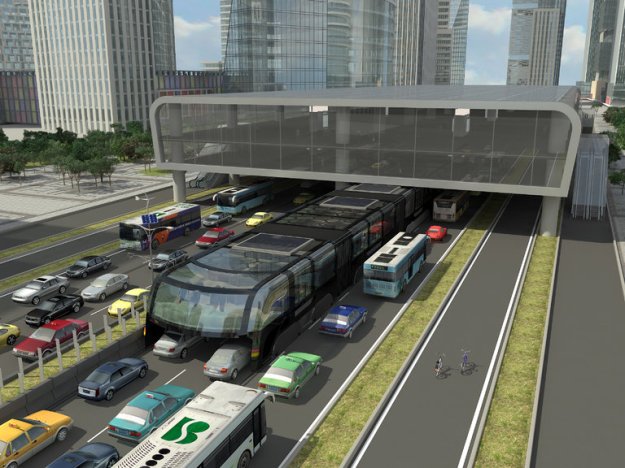 that can use the same I-5 lanes simultaneously with cars. (See the video in the link above.) The Dutch have developed a high-speed electric bus that also can use I-5 at little added cost.
And now comes word that the auction of greenhouse gas (GHG) allowances by the State fell well below forecasts. Due to how HSR is funded out of that allowance fund, HSR’s share will fall by 98% to $2.5 million. Given that the state still has not attracted any private investment, which is a necessity to make this go, it may be time to rethink solutions.
Two news items showed up today on the idea of adopting a worldwide carbon price to reduce GHG emissions. The general idea is to use one of three approaches: 1) world cap & trade allocations (which has been the underlying notion in negotiations so far); 2) setting a specific carbon price or tax through treaty; or 3) using trade tariffs by a coalition of participating nations to incent non-participating ones to control their emissions. There is evidence that pricing carbon is effective in reducing emissions.
The U.S. Secretary of Energy called for a world carbon price implemented through one of the first two methods listed here.
The new American Economics Review has an article that shows that a trade tariff regime imposed by a coalition can induce other nations to control their emissions.
| The Strategic Value of Carbon Tariffs |
| Christoph Böhringer, Jared C. Carbone and Thomas F. Rutherford |
| We ask whether the threat of carbon tariffs might lower the cost of reductions in world carbon emissions by inducing unregulated regions to adopt emission controls. We use a numerical model to generate payoffs of a game in which a coalition regulates emissions and chooses whether to employ carbon tariffs against unregulated regions. Unregulated regions respond by abating, retaliating, or ignoring the tariffs. In the Nash equilibrium, the use of tariffs is a credible and effective threat. It induces cooperation from noncoalition regions that lowers the cost of global abatement substantially relative to the case where the coalition acts alone. (JEL D58, F13, F18, H23, Q54, Q58) |
| Full-Text Access | Supplementary Materials |
I’m not the only one asking whether California’s High Speed Rail (HSR) project is the best way to reduce climate change risk. Dick Startz from UC Santa Barbara confirmed in the LA Times my observation that creating an electric vehicle through-way along I-5 probably can serve the same purpose for much less cost, while delivering GHG reductions much sooner.
As I pointed out, the HSR GHG reduction analysis incorrectly assumes that the mix of motor vehicles will remain gasoline-dominated past 2030. Even an updated analysis cited by HSR proponents ignores the likely penetration of non-hybrid EVs required to meet the state’s emission reduction goals (prepared in a different study by UC Berkeley–shouldn’t a university more fully coordinate it’s related research?) Shouldn’t the HSR Authority be coordinating it’s studies with the planning parameters being used by the Air Resources Board in preparing its GHG reduction plans? Other studies have shown the HSR is not particularly cost effective.
Widespread and effective charging networks are being developed that makes a high speed EV corridor feasible. Access to such a corridor might even encourage EV diffusion. As Startz writes, we should be looking for solutions from this century rather than the last.
Bob Sussman at Brookings writes favorably about the resurrection of cap and trade for GHG regulation as a viable policy option with the Chinese planning to implement a program and the US EPA Clean Power Plan encouraging market trading mechanisms in two forms of compliance. Yet as I read this (and also think about proposals to increase water trading to solve California’s ongoing drought), I can see an important missing element in these discussions–how can these markets be designed to gain success?
In 1996, I wrote “Environmental Commodities Markets: ‘Messy’ Versus ‘Ideal’ Worlds” that explored the issues of market design and political realities. As I’ve written recently, we are not always good at fully compensating the losers in environmental policy making, and these groups tend to oppose policies that are beneficial for society as a result. And market incentive proponents seem to always propose some variation on one of two market designs: 1) everyone for themselves in searching for and settling transactions or 2) a giant periodic auction.
In reality, carefully designing market institutions that work for participants is key to the success of those markets. Daniel Bromley wrote about how just “declaring markets” in Russia and Eastern Europe did not instantly transform those economies, much to our chagrin. The RECLAIM emissions market has woefully underperformed because SCAQMD didn’t think through how transactions could be facilitated (and that failure prompted my article.) Frank Wolak and Jonathan Kolstad confirmed my own FERC testimony that the disfunction of the RECLAIM market led to higher electricity prices in the California crisis of 2000-01.
For a presentation a few years ago, I prepared this typology of market structure that looks at the search and match mechanisms and the price revelation and settlement mechanisms. This presentation focused on water transfer markets in California, but it’s also applicable to emission markets. Markets range from brokered/negotiated real estate to dealer/posted-price groceries. Even the New York Stock Exchange, which is a dealer/auction probably works differently than how most people think. There are differences in efficiency and ease of use, often trading off. As we move forward, we need more discussion about these nuts and bolts issues if we want truly successful outcomes.

Maximillian Auffhammer at UC’s Energy Institute @ Haas focuses on the issue of exporting coal from the Port of Oakland, but he turns to the issue I highlighted recently–the path to accomplishing environmental objectives should travel through compensating those who are worse off from such policies.
Source: Leaking Coal to Asia
All Things Solar and Electric
Musings from M.Cubed on the environment, energy and water
This blog is not necessarily about biking. It's about life that is lived locally, at a human pace.
Energy, Environment and Policy
Musings from M.Cubed on the environment, energy and water
Examining State Authority in Interstate Electricity Markets
Musings from M.Cubed on the environment, energy and water
Musings from M.Cubed on the environment, energy and water
Economic insight and analysis from The Wall Street Journal.
Musings from M.Cubed on the environment, energy and water
Musings from M.Cubed on the environment, energy and water
A few thoughts from John Fleck, a writer of journalism and other things, living in New Mexico
Musings from M.Cubed on the environment, energy and water
Musings from M.Cubed on the environment, energy and water
Musings from M.Cubed on the environment, energy and water
Tips and tricks on programming, evolutionary algorithms, and doing research
Musings from M.Cubed on the environment, energy and water
A blog about water resources and law
Musings from M.Cubed on the environment, energy and water
 Economics Outside the Cube