A detailed discussion about the successes, failures, and intent of these two federal programs.
Source: What Trump and Clinton miss about clean coal and renewables subsidies | Utility Dive

A detailed discussion about the successes, failures, and intent of these two federal programs.
Source: What Trump and Clinton miss about clean coal and renewables subsidies | Utility Dive

This post seems particularly apt for the electricity industry. IOU CEOs typically are “executioners” not “visionaries,” and this is at the heart of their existential conumdrum.
What happens to a company when a visionary CEO is gone? Most often innovation dies and the company coasts for years on momentum and its brand. Rarely does it regain its former glory. Here’s why. Mi…
Source: Why Tim Cook is Steve Ballmer and why he still has his job at Apple • The Berkeley Blog

Paul Brown talks about how chasing “optimization” is a fruitless distraction, which I happen to agree with. We should be focused on exploring the consequences of different pathways and how to mitigate significant vulnerabilities.
 This summarizes expected advantages of the Yolo-Davis Community Choice Energy (CCE) and how it will proceed.
By Leanna Sweha City staff briefed the Council at its last meeting on the timeline for the Joint Davis and Yolo County Community Choice Energy (CCE) progra
Source: Will ‘Independence’ from PG&E Bring Cleaner and Cheaper Electricity? | Davis Vanguard
 Lawrence Berkeley National Laboratory released its 2015 market assessment with almost shocking results. New wind projects are now reaching capacity factors in excess of 40% and PPA prices are at $20/MWH. More than 8,500 MW was installed last year. More at the website below, including the data set and Powerpoint slides.
High speed rail (HSR) may not be the best means to moving people quickly from San Francisco to Los Angeles–it looks like a 20th century solution to a 21st century problem. I’ve written written about how electric vehicles will diminish the projected GHG emission reductions, and may be an effective alternative. Now comes a Chinese-designed super bus that can use the same I-5 lanes simultaneously with cars. (See the video in the link above.) The Dutch have developed a high-speed electric bus that also can use I-5 at little added cost.
And now comes word that the auction of greenhouse gas (GHG) allowances by the State fell well below forecasts. Due to how HSR is funded out of that allowance fund, HSR’s share will fall by 98% to $2.5 million. Given that the state still has not attracted any private investment, which is a necessity to make this go, it may be time to rethink solutions.
Portugal just ran its entire grid for 107 straight hours on 100% renewables. That’s four and a half days. The country now gets about 48% of its energy from green power.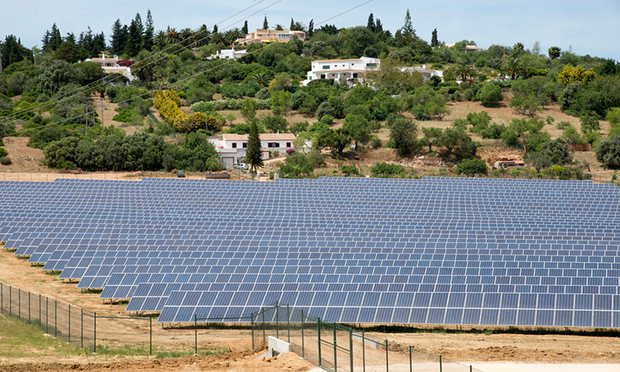
Yolo County and the City of Davis became the latest community to approve a CCE (for community choice energy, an alternative moniker to the legalistic community choice aggregation). I sat on the advisory committee assessing options and the business case is strong for the viability of this option. This is the leading edge of a wave of CCEs across California. The combination of market conditions, falling renewable power costs, recognition of changes in the electricity market, and dissatisfaction with the incumbent utilities is pushing broad community coalitions to take the leap.
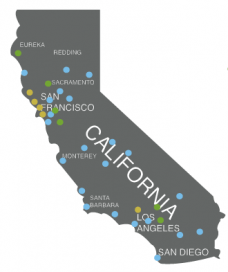 To date three communities have operating CCE’s, with MCE starting first in 2010. MCE is made up of not only Marin County, but also Napa County, and the City of Richmond and Benecia. It also is considering adding new members. It currently has 17 voting communities. Sonoma Clean Power followed in 2014, and is considering adding Lake and Mendocino counties. The City of Lancaster started in late 2015 in SCE’s service territory. Peninsula Clean Energy, composed of San Mateo County and its cities, kicked off service in 2016. In addition, San Francisco has approved a CCE but has had various political barriers to getting off the ground.
Here’s a couple websites that show maps and lists of what counties and cities are pursuing CCAs (the lists are slightly different).
Other communities in the midst of either approving or implementing new CCEs include:
Contra Costa County – considering joining Alameda or MCE, or going it alone
Humboldt County as Redwood Coast Energy Authority – considering joining SCP or going alone
South Bay Cities of Los Angeles County as South Bay Clean Power
Monterey, Santa Cruz and San Benito Counties and their cities as Monterey Bay Community Power
Riverside and San Bernardino Counties – issued RFP for joint study
City of San Diego – issued RFP for a study
Santa Clara County and 11 cities as Silicon Valley CCE Partners – starting late 2016
City of San Jose – exploring joining SVCCEP or going alone
Santa Barbara County, San Luis Obispo County and Ventura County – released study on feasibility and options
City of Walnut Creek – considering joining with Contra Costa or going alone
All of this activity has serious implications for IOU purchasing and contract management going forward, CPUC regulation and overall procurement transparency. The IOUs and CPUC have operated in black box to date claiming that confidentiality is necessary to prevent market manipulation. Yet with all of these CCEs likely operating as open books, everyone will have the market information that the IOUs claim is so vital to protect. This is likely to open up IOU PPAs to greater scrutinty–attention that neither the IOUs or the CPUC probably want.
Severin Borenstein at the Energy Institute @ Haas wrote a good summary of the issues around community choice aggregation.
Source: Is “Community Choice” Electric Supply a Solution or a Problem?
I am on the City of Davis’ Community Choice Energy Advisory Committee and have been looking at these issues closely for a year. I had my own reactions to this post:
First, in California the existing and proposed CCEs (there are probably a dozen in process at the moment to add to the 3 existing ones) universally offer a higher “green” % product than the incumbent IOU, most often a 50% RPS product. And although MCE and SCP started out relying on RECs of various types to start out, they all are phasing out most of those by 2017. I think most will offer a 100% product as well.
The reason that these CCE’s are able to offer lower rates than the IOUs at a lower RPS is that the IOUs prematurely contracted long for renewables in anticipation of the 2020 goal. In fact, the penalty for failing to meet the RPS in any given year is so low, that the prudent strategy by an IOU would have been to risk being short in each year and contract for the year ahead instead of locking in too many 20+ year PPAs. At least one reason why this happened is that the IOUs require confidentiality by any reviewers and no connections to any competing procurement decisions. As a result the outside reviewers couldn’t be up to speed on the rapidly falling PPA prices. The CPUC has made a huge mistake on this point (and the CEC has rightfully harassed the CPUC over this policy.)
CCE’s also offer the ability to craft a broader range of rate offerings to customers–even flat 20 year rates that can compete with solar roofs on the main issue that customers really care about: price guarantees. In addition, CCE’s are more likely to be to nimbly adjust a rapidly changing utility landscape. CCE’s are much less likely to care about falling loads because their earnings aren’t dependent on continued service.
It’s also to recognize the difference between local government general services (e.g., safety and public protection, social services, regulation, etc.) and enterprise services (e.g., utilities of all sorts). In general, the latter are as efficient as IOUs (except LADWP which illustrates the INefficiency created by overlarge organizations). So one can’t make a broad generalization about local government problems and how they might apply in this situation. The fact is that almost all of the existing and new CCEs are or will be JPAs, which are often even leaner. (Lancaster is the exception.)
Finally, Severin made this statement:
“Whatever regulatory mandates, managerial mistakes, or incompetence occurred in the past, customers switching to a CCA should not be allowed to shift their share of costs from past decisions onto other ratepayers.”
I have to disagree to a certain exent with this statement. Am I forced to pay for the past incompetencies of GM or GE or any other corporation? Yes, utilities have a higher assurance of return on their investments, but no where is it written that it is “ironclad.” Those utilities had an assurance first as the sole legal provider and then as the provider of last resort, but that’s eroding. In California, the CTC was a political deal to get the IOUs out of the way. The fact is in California that the CPUC abrogated its responsibility to oversee these decisions on behalf of ratepayers with the encouragement of the IOUs. If the IOUs want to retain their customers, then they should be forced to compete with the CCEs (and DA LSEs.) It’s time to reopen this matter.
And to add a bit more:
The logic of this statement is that ANY customer who leaves the system, including moving to another area, state or nation, should have to continue to pay these stranded costs. Why should we draw the line arbitrarily at whether they happen to still get distribution services even though the generation services have been completely severed? Particularly if someone moves from say, San Francisco to Palo Alto, that customer still relies on PG&E’s transmission system and its hydro system for ancillary services. Why not charge that Palo Alto customer a non-by-passable charge? And why shouldn’t it be reciprocal? Relying on “political practicality” is not an answer. Either ALL customers are tethered forever, or no customers are required to meet this obligation.
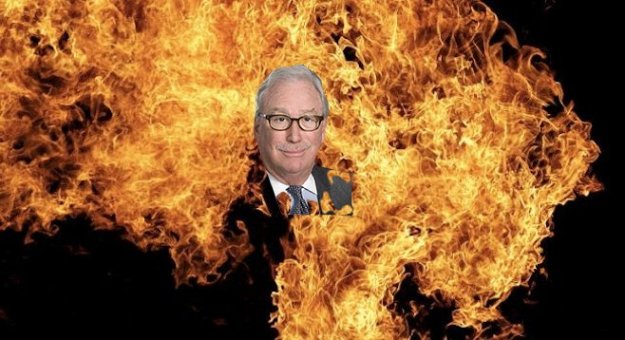
Assemblymember Mike Gato (D-LA) is proposing a constitutional amendment to dissolve the CPUC–blowing up the box! The CPUC currently regulates energy utilities, telcom, transportation and water. That’s a tall order to ask five people to competently understand all of those arenas. And on the flip side, many have recognized that the state has too many “cooks in the kitchen” regulating energy, and it’s only gotten worse with increased climate change regulation. The CPUC hasn’t done much to burnish its reputation with the scandal of Mike Peevey’s “rulings for sale” and the inadequate responses to the San Bruno and Porter Ranch disasters. Closing up shop and starting over may be the best solution.
All Things Solar and Electric
Musings from M.Cubed on the environment, energy and water
This blog is not necessarily about biking. It's about life that is lived locally, at a human pace.
Musings from M.Cubed on the environment, energy and water
Examining State Authority in Interstate Electricity Markets
Musings from M.Cubed on the environment, energy and water
Musings from M.Cubed on the environment, energy and water
Economic insight and analysis from The Wall Street Journal.
Musings from M.Cubed on the environment, energy and water
Musings from M.Cubed on the environment, energy and water
A few thoughts from John Fleck, a writer of journalism and other things, living in New Mexico
Musings from M.Cubed on the environment, energy and water
Musings from M.Cubed on the environment, energy and water
Musings from M.Cubed on the environment, energy and water
Tips and tricks on programming, evolutionary algorithms, and doing research
Musings from M.Cubed on the environment, energy and water
A blog about water resources and law
Musings from M.Cubed on the environment, energy and water

