
Solar and wind power combined also hit a peak on the same day by serving 49.2% of demand.
Source: CAISO notches record, serving 56.7% of demand with renewable energy in one day | Utility Dive

Solar and wind power combined also hit a peak on the same day by serving 49.2% of demand.
Source: CAISO notches record, serving 56.7% of demand with renewable energy in one day | Utility Dive
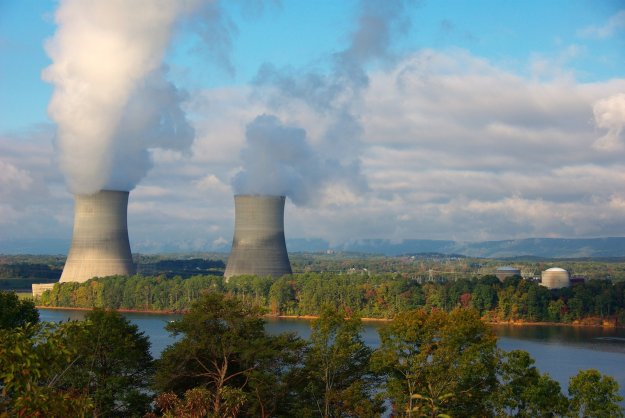
Westinghouse has a long history, rivaling General Electric for decades. The two nuclear plants its constructing are overbudget and behind schedule (which was already nearly a decade to completion.) Hard to believe any firm will want to take on these risks in the future.
Utilities are already preparing for potential fallout if the engineering firm overseeing construction of the Vogtle and VC Summer nuclear units goes under.
Source: Reports: Nuclear firm Westinghouse Electric to file for bankruptcy next week | Utility Dive
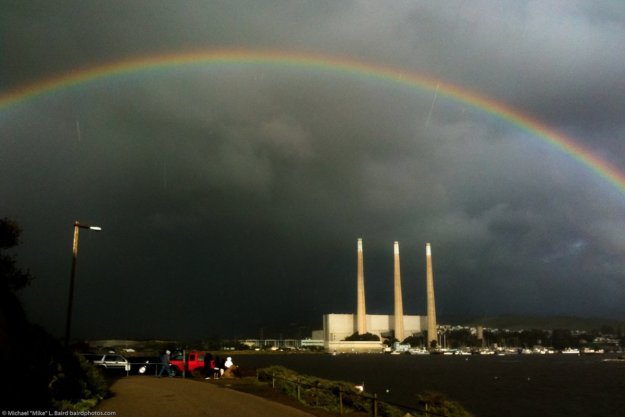
It’s not environmental regulation now that is leading to the demise of the coal industry–it’s the cheaper cost of alternatives. Rather than “bring back coal mining jobs,” we should focus on how we retrain and relocate those displaced workers. And we need to look for new industries that may thrive in “coal country.”
Moody’s: Falling wind energy costs threaten Midwestern coal plants | Utility Dive
In the Midwest, the investor services firm sees 56 GW of regulated coal-fired capacity at risk.
Source: Moody’s: Falling wind energy costs threaten Midwestern coal plants | Utility Dive

Over the last year, various states have introduced subsidies and preferences for different electricity resources that have circumvented the independent system operator (ISO) markets that the Federal Energy Regulatory Commission (FERC) approved in the 1990s. FERC’s intent was that hourly markets would provide all of the price signals needed to induce appropriate investment. As we’ve found out in California, that hasn’t worked out that way. These markets have difficulty conveying the full price information for all services (in part because many utility-owned generators are subsidized through state rate of return regulation) and the environmental and technological benefits that may be difficult to monetize in an hourly price.
FERC has challenged some of these new rules, and both won and lost in the courts. Now the market monitor in the biggest market in the U.S. that covers the Northeast and Midwest is joining the fight. If the market monitor wins, this will raise the salient question of whether FERC needs to rethink its policy, or will states begin to withdraw from the ISOs to pursue their own policy goals?
The market monitor argues the state’s subsidies “unlawfully intruded” on FERC’s authority over wholesale interstate electricity sales.
Source: PJM market monitor opposes Illinois nuclear subsidies | Utility Dive
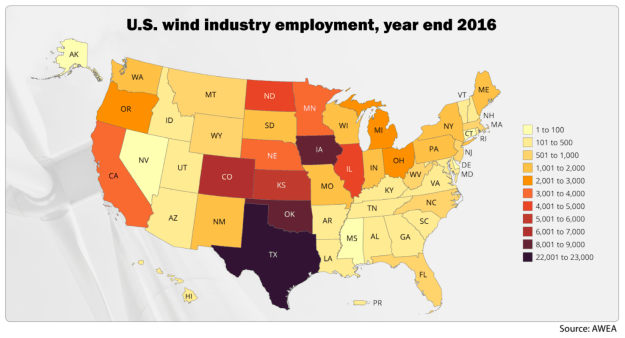

 Five graphics that show strong growth in U.S. wind energy after a two-year slowdown
Source: How the US Wind Sector Is Building Momentum, Driving Economic Benefits | Greentech Media

We just looked at the frequency of different water conditions over the last 15, 35 and 110 years. Over the longer period, wet, “normal” or average, and dry years have occurred in about equal shares, at about one-third each. But over the last 35 years dry conditions have occurred in about half of the years. Over the last 15 years, wet conditions have declined to less than 20% of the years.
We’re also working with Sustainable Conservation on a program that will incentivize growers to use diverted floodwaters to recharge groundwater aquifers below their fields.
California is likely to see more extreme floods and drought with climate change, but the state’s water infrastructure may not be ready.
Source: California’s Water System Built for a Climate We No Longer Have | KQED Science
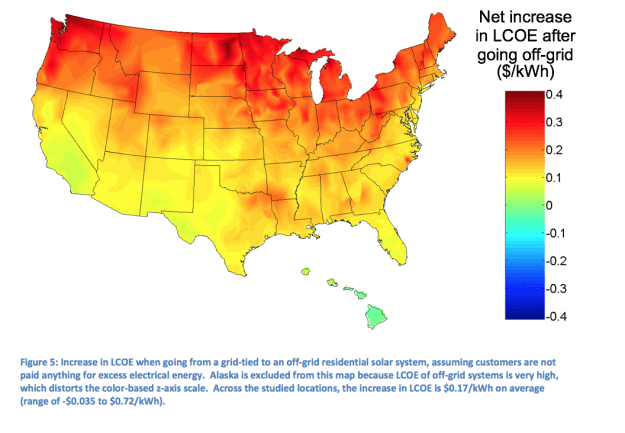 “A Rochester Institute of Technology study says a customer must face high electricity bills and unfavorable net metering or feed-in policies for grid defection to work.”
Yet…this study used current battery costs (at $350/KW-Hr), ignoring probably cost decreases, and then made more restrictive assumptions about how such a system might work. It’s not clear if “defection” meant complete self sufficiency, or reducing the generation portion (which in California about half of electricity bill.) Regardless, the study shows that grid defection is cost-effective in Hawaii, confirm the RMI findings. Even so, RMI said it would take at least 10 years before such defection was cost-effective in even the high-cost states like New York and California.
A more interesting study would be to look at the “break-even” cost thresholds for solar panels and batteries to make these competitive with utility service. Then planners and decision makers could assess the likelihood of reaching those levels within a range of time periods.
Source: A study throws cold water on residential solar-plus-storage economics | Utility Dive
Competition from cheap natural gas generation is again the reason behind the second major coal closure announcement in a month.
Source: Utilities vote to close 2,250 MW Navajo plant, largest coal generator in western US | Utility Dive
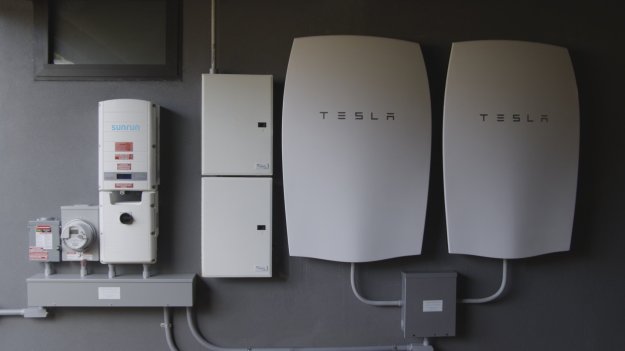 A new study in Nature Energy finds storing rooftop solar can increase emissions and energy consumption.
My thoughts: Here’s the key statement for the finding in this report: “based on today’s Texas grid mix, which is primarily made up of fossil fuels.” If the either the marginal generation on the grid is low or no GHG (e.g., renewables overgeneration which is an increasing problem in California) or the connection to the grid is cut or restricted (e.g., in a microgrid), then this premise doesn’t hold.
This study relies on fossil fueled generation being the marginal energy source. It also focuses solely on operational changes with existing resources. The appropriate frame is looking at the change in generation investment with and without storage, so for example more renewables become cost effective with storage so the overall generation mix changes.
The second problem is that most of the production cost models are yet incapable of capturing reduction in flexible capacity use. That’s why the California Energy Commission has had DNV and LBNL working on modeling those resources. So the emission savings are underestimated.
The third problem is that savings in residual unit commitment (RUC) is underestimated in the models. These are gas units running on standby with no-load, to be available the next day for ramping, load following or reliability. Storage reduces the need for these resources as well. NREL recently released a study on the value of storage that captures this benefit.
If these findings are valid, then the existing Helms pumped storage plant is also increasing GHG emissions. One could go so far as to say that the value of pondage hydropower storage may be so diminished that relicensing conditions that require run of river operations may have little effect on costs and GHG emissions.
Source: Residential storage can undercut benefits of rooftop solar, says new study | Utility Dive
All Things Solar and Electric
Musings from M.Cubed on the environment, energy and water
This blog is not necessarily about biking. It's about life that is lived locally, at a human pace.
Energy, Environment and Policy
Musings from M.Cubed on the environment, energy and water
Examining State Authority in Interstate Electricity Markets
Musings from M.Cubed on the environment, energy and water
Musings from M.Cubed on the environment, energy and water
Economic insight and analysis from The Wall Street Journal.
Musings from M.Cubed on the environment, energy and water
Musings from M.Cubed on the environment, energy and water
A few thoughts from John Fleck, a writer of journalism and other things, living in New Mexico
Musings from M.Cubed on the environment, energy and water
Musings from M.Cubed on the environment, energy and water
Musings from M.Cubed on the environment, energy and water
Tips and tricks on programming, evolutionary algorithms, and doing research
Musings from M.Cubed on the environment, energy and water
A blog about water resources and law
Musings from M.Cubed on the environment, energy and water

 Economics Outside the Cube