Problems with “Residential storage can undercut benefits of rooftop solar, says new study” | (A response to a Utility Dive article)

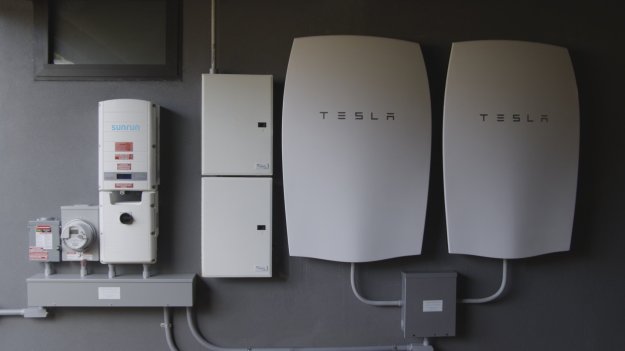
A new study in Nature Energy finds storing rooftop solar can increase emissions and energy consumption.

My thoughts: Here’s the key statement for the finding in this report: “based on today’s Texas grid mix, which is primarily made up of fossil fuels.” If the either the marginal generation on the grid is low or no GHG (e.g., renewables overgeneration which is an increasing problem in California) or the connection to the grid is cut or restricted (e.g., in a microgrid), then this premise doesn’t hold.

This study relies on fossil fueled generation being the marginal energy source. It also focuses solely on operational changes with existing resources. The appropriate frame is looking at the change in generation investment with and without storage, so for example more renewables become cost effective with storage so the overall generation mix changes.

The second problem is that most of the production cost models are yet incapable of capturing reduction in flexible capacity use. That’s why the California Energy Commission has had DNV and LBNL working on modeling those resources. So the emission savings are underestimated.

The third problem is that savings in residual unit commitment (RUC) is underestimated in the models. These are gas units running on standby with no-load, to be available the next day for ramping, load following or reliability. Storage reduces the need for these resources as well. NREL recently released a study on the value of storage that captures this benefit.

If these findings are valid, then the existing Helms pumped storage plant is also increasing GHG emissions. One could go so far as to say that the value of pondage hydropower storage may be so diminished that relicensing conditions that require run of river operations may have little effect on costs and GHG emissions.

Source: Residential storage can undercut benefits of rooftop solar, says new study | Utility Dive
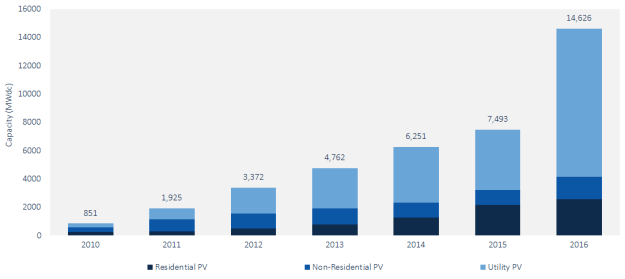

Repost: US Solar Market Grows 95% in 2016, Smashes Records | Greentech Media

GTM Research and SEIA present data from the upcoming U.S. Solar Market Insight report.

Source: US Solar Market Grows 95% in 2016, Smashes Records | Greentech Media

Repost: Wind capacity blows past hydro to become most plentiful US renewable | Utility Dive

Installed wind capacity is more than 82,000 MW, according to a trade group, making it the nation’s largest renewable resource ahead of hydro.

Source: Wind capacity blows past hydro to become most plentiful US renewable | Utility Dive

And then this…Trump’s energy plan doesn’t mention solar – The Washington Post

After the release of a study showing solar now employs more than oil, gas and coal combined.

Source: Trump’s energy plan doesn’t mention solar, an industry that just added 51,000 jobs – The Washington Post

Repost: 1 Out of 50 New US Jobs Came From the Solar Industry in 2016 | Greentech Media

Source: 1 Out of 50 New US Jobs Came From the Solar Industry in 2016 | Greentech Media

Repost from Environmental Economics: Standing by ‘An Economic View of the Environment’

Rob Stavins is a leading environmental economists at Harvard. His blog was hacked after a post critical of Trump last fall. This is a repost of Stavins’ explanation.

Source: Environmental Economics: Standing by ‘An Economic View of the Environment’

William Nordhaus now urges a more dramatic response to climate change – CSMonitor.com

William Nordhaus has long relied on traditional economic cost-benefit analysis to minimize the costs to the world economy from potential climate change impacts. This article discusses how he now views the increasing risk, the continuing uncertainty, and the likely increasing costs from delayed responses as driving the need for a more rapid effort.

Source: Why a climate economist is giving carbon’s ‘social cost’ a second look – CSMonitor.com

Repost from AER: Deposit Competition and Financial Fragility: Evidence from the US Banking Sector

AMERICAN ECONOMIC REVIEW VOL. 107, NO. 1, JANUARY 2017

by Mark Egan, Ali Hortaçsu, and Gregor Matvos

We develop a structural empirical model of the US banking sector. Insured depositors and run-prone uninsured depositors choose between differentiated banks. Banks compete for deposits and endogenously default. The estimated demand for uninsured deposits declines with banks’ financial distress, which is not the case for insured deposits. We calibrate the supply side of the model. The calibrated model possesses multiple equilibria with bank-run features, suggesting that banks can be very fragile. We use our model to analyze proposed bank regulations. For example, our results suggest that a capital requirement below 18 percent can lead to significant instability in the banking system.

Enlisting Davis’ Citizen-Analysts | Davis Vanguard

By Richard McCann

Why are we not using Davis’ wealth of human capital to our advantage? Why don’t we assign, and even hire or retain, these individuals to prepare these analyses for commission review?

Source: Enlisting Davis’ Citizen-Analysts | Davis Vanguard