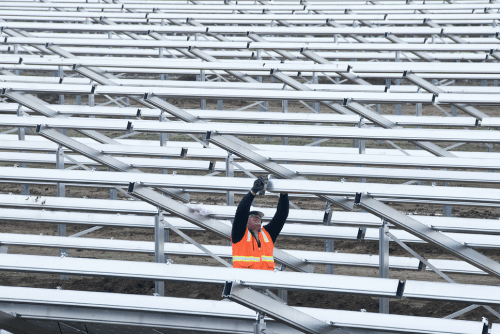
 Source: 1 Out of 50 New US Jobs Came From the Solar Industry in 2016 | Greentech Media
Repost: 1 Out of 50 New US Jobs Came From the Solar Industry in 2016 | Greentech Media
1 Reply


Five useful insights into where the electricity industry is headed.

This post seems particularly apt for the electricity industry. IOU CEOs typically are “executioners” not “visionaries,” and this is at the heart of their existential conumdrum.
What happens to a company when a visionary CEO is gone? Most often innovation dies and the company coasts for years on momentum and its brand. Rarely does it regain its former glory. Here’s why. Mi…
Source: Why Tim Cook is Steve Ballmer and why he still has his job at Apple • The Berkeley Blog
 This summarizes expected advantages of the Yolo-Davis Community Choice Energy (CCE) and how it will proceed.
By Leanna Sweha City staff briefed the Council at its last meeting on the timeline for the Joint Davis and Yolo County Community Choice Energy (CCE) progra
Source: Will ‘Independence’ from PG&E Bring Cleaner and Cheaper Electricity? | Davis Vanguard
Portugal just ran its entire grid for 107 straight hours on 100% renewables. That’s four and a half days. The country now gets about 48% of its energy from green power.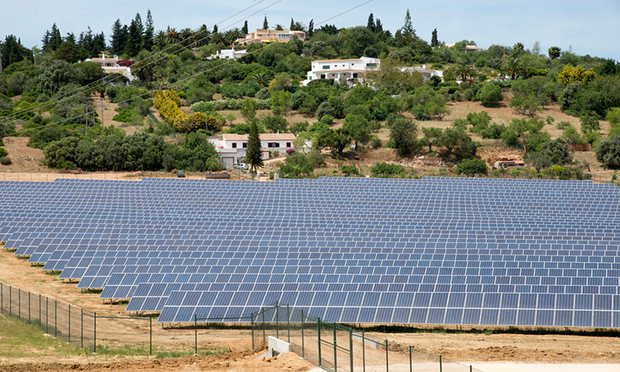
Severin Borenstein at the Energy Institute @ Haas wrote a good summary of the issues around community choice aggregation.
Source: Is “Community Choice” Electric Supply a Solution or a Problem?
I am on the City of Davis’ Community Choice Energy Advisory Committee and have been looking at these issues closely for a year. I had my own reactions to this post:
First, in California the existing and proposed CCEs (there are probably a dozen in process at the moment to add to the 3 existing ones) universally offer a higher “green” % product than the incumbent IOU, most often a 50% RPS product. And although MCE and SCP started out relying on RECs of various types to start out, they all are phasing out most of those by 2017. I think most will offer a 100% product as well.
The reason that these CCE’s are able to offer lower rates than the IOUs at a lower RPS is that the IOUs prematurely contracted long for renewables in anticipation of the 2020 goal. In fact, the penalty for failing to meet the RPS in any given year is so low, that the prudent strategy by an IOU would have been to risk being short in each year and contract for the year ahead instead of locking in too many 20+ year PPAs. At least one reason why this happened is that the IOUs require confidentiality by any reviewers and no connections to any competing procurement decisions. As a result the outside reviewers couldn’t be up to speed on the rapidly falling PPA prices. The CPUC has made a huge mistake on this point (and the CEC has rightfully harassed the CPUC over this policy.)
CCE’s also offer the ability to craft a broader range of rate offerings to customers–even flat 20 year rates that can compete with solar roofs on the main issue that customers really care about: price guarantees. In addition, CCE’s are more likely to be to nimbly adjust a rapidly changing utility landscape. CCE’s are much less likely to care about falling loads because their earnings aren’t dependent on continued service.
It’s also to recognize the difference between local government general services (e.g., safety and public protection, social services, regulation, etc.) and enterprise services (e.g., utilities of all sorts). In general, the latter are as efficient as IOUs (except LADWP which illustrates the INefficiency created by overlarge organizations). So one can’t make a broad generalization about local government problems and how they might apply in this situation. The fact is that almost all of the existing and new CCEs are or will be JPAs, which are often even leaner. (Lancaster is the exception.)
Finally, Severin made this statement:
“Whatever regulatory mandates, managerial mistakes, or incompetence occurred in the past, customers switching to a CCA should not be allowed to shift their share of costs from past decisions onto other ratepayers.”
I have to disagree to a certain exent with this statement. Am I forced to pay for the past incompetencies of GM or GE or any other corporation? Yes, utilities have a higher assurance of return on their investments, but no where is it written that it is “ironclad.” Those utilities had an assurance first as the sole legal provider and then as the provider of last resort, but that’s eroding. In California, the CTC was a political deal to get the IOUs out of the way. The fact is in California that the CPUC abrogated its responsibility to oversee these decisions on behalf of ratepayers with the encouragement of the IOUs. If the IOUs want to retain their customers, then they should be forced to compete with the CCEs (and DA LSEs.) It’s time to reopen this matter.
And to add a bit more:
The logic of this statement is that ANY customer who leaves the system, including moving to another area, state or nation, should have to continue to pay these stranded costs. Why should we draw the line arbitrarily at whether they happen to still get distribution services even though the generation services have been completely severed? Particularly if someone moves from say, San Francisco to Palo Alto, that customer still relies on PG&E’s transmission system and its hydro system for ancillary services. Why not charge that Palo Alto customer a non-by-passable charge? And why shouldn’t it be reciprocal? Relying on “political practicality” is not an answer. Either ALL customers are tethered forever, or no customers are required to meet this obligation.
Source: “Real” Electricity Still Comes from the Grid
Catherine Wolfram at UC Berkeley posted about their paper looking at costs of distributed energy systems in Kenya and concluding that these were too expensive for households compared to connecting to the grid. However, the paper came under immediate criticism.
Here’s my thoughts based on her representation of the paper’s findings, some of which are mirrored by other commentators:
First, the paper talks about costs on one side, but doesn’t put them in perspective to the alternatives. The post lists the cost of the individual systems, but not the expected connection costs to the grid.
Further the paper takes a static look at current costs and doesn’t account for the differential trends in the sets of costs for an home-based system versus connecting to the grid. The latter costs can be expected to be steady or even rising, while it’s well known that both solar and storage costs have fallen rapidly.
Different scales of “grid” also are important. For example, solar projects show scale economies up to about 3 MW but then modular construction flattens the per kW cost. A village microgrid separate from a national central grid may be quite cost competitive.
Finally, the paper appears to lump large hydro in with other utility-scale renewables. The environmental (and economic development) record for large-scale hydro projects in the developing world is dubious at best. There is evidence of significant methane emissions from tropical reservoirs. Habitat is destroyed and poorly designed projects don’t deliver expected benefits. Hydro is by far the largest energy supplier on these grids, and they may be little better than coal from an overall environmental perspective.
Just hooking up EV owners and not compensating them for the storage services they can provide won’t be a successful or popular idea. Rather the first step is to figure out what is the value of that storage? A new NREL study estimates that value to be about $59 per kW-year with a 33% RPS portfolio in California, increasing to $109/kW-year at a 40% RPS. For a typical EV, that could translate into $300 to $550 per year or $2,000 to $5,000 over 10 years.
Then you assess what are the incremental costs to the EV owner in reduced battery life. Note that batteries depleted 30% can’t be used for EVs any more but are still valuable for grid storage. Vendors probably can build in-home racks that store and connect the depleted batteries. Those become factors in determining the payments to the EV owners and their agents.
As for enrolling EV owners in a storage management program, it need not be cumbersome if enrollment is the default (opt-out) when buying a car or installing a charging station. (See all of the literature on the importance of opt-out vs. opt-in and status quo bias.) The auto dealer or charging administrator becomes the agent. An EV buyer might sign up for the program and not even know it. The charging process could work much like the massive distributed computing projects that harness small parts of the idle processors across millions of personal computers. All of this becomes part of the peer-to-peer transactive energy (TE) grid.
Jeff McMahon at Forbes wrote a nice two-part series on the existential decisions that utilities face going forward. Part 1 is here, and Part 2 here. I posted earlier a longer article from the New Yorker looking at the changing landscape.
Lawrence Berkeley National Laboratory released a study on how utility investment in transmission and distribution compares to changes in reliability. LBNL found that outages are increasing in number and duration nationally, and that levels of investment are not well correlated with improved reliability.
We testified on behalf of the Agricultural Energy Consumers Association in both the SCE and PG&E General Rate Cases about how distribution investment is not justified by the available data. Both utilities asked for $2 billion to meet “growth” yet both have seen falling demand since 2007. PG&E invested $360 million in its Cornerstone Improvement program, but a good question is, what is the cost-effectiveness of that improved reliability? Perhaps the new distribution resource planning exercise will redirect investment in a more rationale way.
All Things Solar and Electric
Musings from M.Cubed on the environment, energy and water
This blog is not necessarily about biking. It's about life that is lived locally, at a human pace.
Energy, Environment and Policy
Musings from M.Cubed on the environment, energy and water
Examining State Authority in Interstate Electricity Markets
Musings from M.Cubed on the environment, energy and water
Musings from M.Cubed on the environment, energy and water
Economic insight and analysis from The Wall Street Journal.
Musings from M.Cubed on the environment, energy and water
Musings from M.Cubed on the environment, energy and water
A few thoughts from John Fleck, a writer of journalism and other things, living in New Mexico
Musings from M.Cubed on the environment, energy and water
Musings from M.Cubed on the environment, energy and water
Musings from M.Cubed on the environment, energy and water
Tips and tricks on programming, evolutionary algorithms, and doing research
Musings from M.Cubed on the environment, energy and water
A blog about water resources and law
Musings from M.Cubed on the environment, energy and water
 Economics Outside the Cube