Tag Archives: energy economics

Looking for pumped storage in all the wrong places

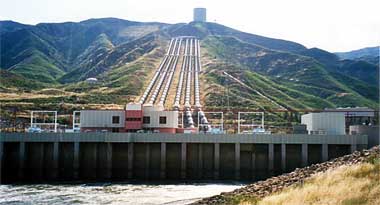
castaic_power_plant

LADWP is proposing to spend $3 billion on a pumped storage facility at the Hoover Dam on the Colorado River. Yet, LADWP has not been using extensively its aging 1,247 MW Castaic pumped storage plant on the State Water Project in the pumping recovery mode. Instead, LADWP runs it more like a standard hydropower plant, and uses pumping to supplement and extend the peak power generation, rather than using it to store excess day time power. And the SWP’s 759 MW pumped storage plant at the Hyatt-Thermalito powerhouse at Lake Oroville has been not been used effectively for decades.

The more prudent course would seem to be to focus on refurbishing and updating existing facilities, with variable speed pumps for example, to deliver utility scale storage that can capture excess renewable energy generation nearer large load centers. The State Water Contractors should be incented to upgrade these facilities through contracts with the state’s electric utilities. Unfortunately, no direct market mechanism exists to provide a true value for these resources so long at the California Public Utilities Commission and the California Independent System Operator avoid developing full pricing. As it stands, the current pricing scheme socializes and subsidizes a number of electricity services such as transmission, unit commitment decisions, and reliability services.
Commentary on CPUC Rate Design Workshop

cartoon

The California Public Utilities Commission (CPUC) held a two-day workshop on rate design principles for commercial and industrial customers. To the the extent possible, rates are designed in California to reflect the temporal changes in underlying costs–the “marginal costs” of power production and delivery.

Professor Severin Borenstein’s opening presentation doesn’t discuss a very important aspect of marginal costs that we have too long ignored in rate making. That’s the issue of “putty/clay” differences. This is an issue of temporal consistency in marginal cost calculation. The “putty” costs are those short term costs of operating the existing infrastructure. The “clay” costs are those of adding infrastructure which are longer term costs. Sometimes the operational costs can be substitutes for infrastructure. However we are now adding infrastructure (clay) in renewables have have negligible operating (putty) costs. The issue we now face is how to transition from focusing on putty to clay costs as the appropriate marginal cost signals.

Carl Linvill from the Regulatory Assistance Project (RAP) made a contrasting presentation that incorporated those differences in temporal perspectives for marginal costs.

Another issue raised by Doug Ledbetter of Opterra is that customers require certainty as well as expected returns to invest in energy-saving projects. We can have certainty for customers if the utilities vintage/grandfather rates and/or structures at the time they make the investment. Then rates / structures for other customers can vary and reflect the benefits that were created by those customers making investments.

Jamie Fine of EDF emphasized that rate design needs to focus on what is actionable by customers more so than on a best reflection of underlying costs. As an intervenor group representative, we are constantly having this discussion with utilities. Often when we make a suggestion about easing customer acceptance, they say “we didn’t think of that,” but then just move along with their original plan. The rise of DERs and CCAs are in part a response to that tone-deaf approach by the incumbent utilities.

The end of nuclear in the U.S. for now?

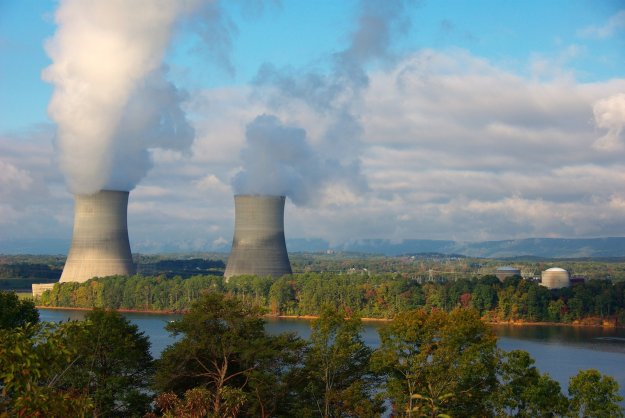
Westinghouse has a long history, rivaling General Electric for decades. The two nuclear plants its constructing are overbudget and behind schedule (which was already nearly a decade to completion.) Hard to believe any firm will want to take on these risks in the future.

Reports: Nuclear firm Westinghouse Electric to file for bankruptcy next week | Utility Dive

Utilities are already preparing for potential fallout if the engineering firm overseeing construction of the Vogtle and VC Summer nuclear units goes under.  

Source: Reports: Nuclear firm Westinghouse Electric to file for bankruptcy next week | Utility Dive

Why coal isn’t coming back–cheap renewables

It’s not environmental regulation now that is leading to the demise of the coal industry–it’s the cheaper cost of alternatives. Rather than “bring back coal mining jobs,” we should focus on how we retrain and relocate those displaced workers. And we need to look for new industries that may thrive in “coal country.”

Moody’s: Falling wind energy costs threaten Midwestern coal plants | Utility Dive

In the Midwest, the investor services firm sees 56 GW of regulated coal-fired capacity at risk.

Source: Moody’s: Falling wind energy costs threaten Midwestern coal plants | Utility Dive

Push comes to shove on whether electricity markets are functioning

Over the last year, various states have introduced subsidies and preferences for different electricity resources that have circumvented the independent system operator (ISO) markets that the Federal Energy Regulatory Commission (FERC) approved in the 1990s. FERC’s intent was that hourly markets would provide all of the price signals needed to induce appropriate investment. As we’ve found out in California, that hasn’t worked out that way. These markets have difficulty conveying the full price information for all services (in part because many utility-owned generators are subsidized through state rate of return regulation) and the environmental and technological benefits that may be difficult to monetize in an hourly price.

FERC has challenged some of these new rules, and both won and lost in the courts.  Now the market monitor in the biggest market in the U.S. that covers the Northeast and Midwest is joining the fight. If the market monitor wins, this will raise the salient question of whether FERC needs to rethink its policy, or will states begin to withdraw from the ISOs to pursue their own policy goals?

PJM market monitor opposes Illinois nuclear subsidies | Utility Dive

The market monitor argues the state’s subsidies “unlawfully intruded” on FERC’s authority over wholesale interstate electricity sales. 

Source: PJM market monitor opposes Illinois nuclear subsidies | Utility Dive

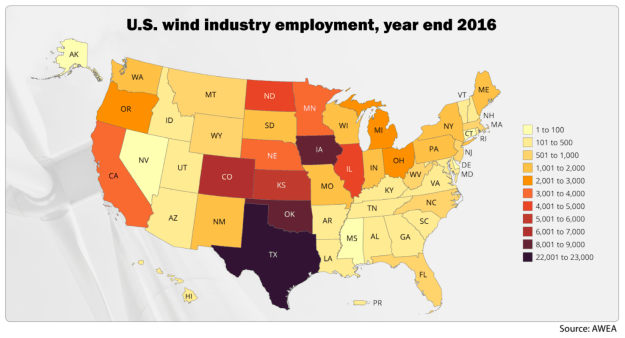
Repost: How the US Wind Sector Is Building Momentum, Driving Economic Benefits | Greentech Media

Five graphics that show strong growth in U.S. wind energy after a two-year slowdown

Source: How the US Wind Sector Is Building Momentum, Driving Economic Benefits | Greentech Media

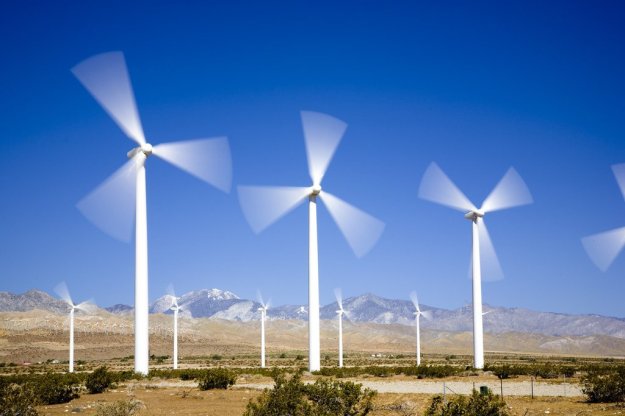
Repost: Wind capacity blows past hydro to become most plentiful US renewable | Utility Dive

Installed wind capacity is more than 82,000 MW, according to a trade group, making it the nation’s largest renewable resource ahead of hydro.

Source: Wind capacity blows past hydro to become most plentiful US renewable | Utility Dive

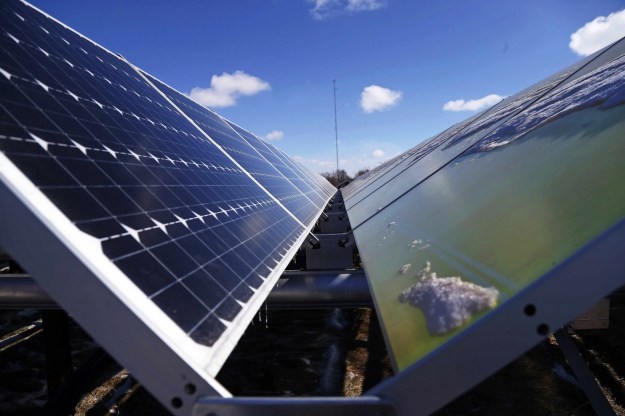
And then this…Trump’s energy plan doesn’t mention solar – The Washington Post

After the release of a study showing solar now employs more than oil, gas and coal combined.

Source: Trump’s energy plan doesn’t mention solar, an industry that just added 51,000 jobs – The Washington Post

Reblog: Inconvenient Truths about Landowner (Un)Willingness to Grow Dedicated Bioenergy Crops: Choices Magazine

Dedicated production of biofuels has been a Holy Grail for the sector, but this study finds that this is unlikely.

Source: 4th Quarter 2016 | Choices Magazine Online

How to misconstrue statistics in your favor: an example arguing against SB 32


statebystatechangeinco2emissionrateThis blog post on Fox & Hounds is an example of how to take statistics of one cause-and-effect relationship and misapply them to another situation. In this case, this graphic above shows how GHG emissions have dropped dramatically in states that used to burn coal to generate electricity, but now rely much more on natural gas. The decline in coal emissions has occurred over the last half-decade due to the fall in gas prices and the increased stringency in air quality regulations. But more importantly, those states had higher emissions that California to start with because they have been laggards in protecting their environments. The chart shows that these states are finally starting to catch up! If anything, this supports adopting SB 32 as a follow on to AB 32!

Yet the blog post misconstrues this situation to argue that it’s the “free market” that somehow is generating these greater reductions, implying that California and Mississippi had started from the same place–which of course if far from the truth. Yes, the market push from natural gas fracking explains some of this, but California was already so far ahead due to its own efforts that it has less room to improve.

Watch for these types of misrepresentations. Understand the initial premises by the authors. Ask hard questions before you accept their conclusions.

Source: There’s a Better Way :: Fox&Hounds