‘Normative science’ has a corrosive effect on the entire scientific enterprise, says Dr. Robert Lackey These days, scientists in environmental science, natural resources, ecology, conse…
Source: MAVEN’S NOTEBOOK – Water news


‘Normative science’ has a corrosive effect on the entire scientific enterprise, says Dr. Robert Lackey These days, scientists in environmental science, natural resources, ecology, conse…
Source: MAVEN’S NOTEBOOK – Water news
 Davis has not been able to develop larger tracts of land to attract firms working on innovation and partnering with UC Davis. Opponents of several proposed projects have claimed that developers can instead assemble the numerous infill parcels that already exist within city limits to create the needed innovation parks. Now a new study in the leading journal, American Economics Review, finds that in Los Angeles, assembling a group of parcels for such projects faces sale prices 15% to 40% more than a single parcel project. And that doesn’t include the typical per parcel transaction costs that are compounded by multiple purchases. The bottom line is that infill development for larger projects face a high cost premium that must be acknowledged.
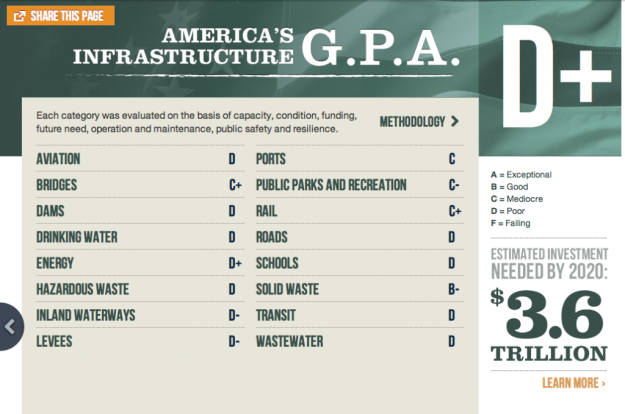
At the core of the dissatisfaction driving support for Brexit, Donald Trump (and Bernie Sanders) is economic dislocation that reduced the jobs and wages of those who worked in the manufacturing and construction industries. The solution is NOT to return to retail manufacturing, where the U.S. can’t compete with China; nor is it to extract more fossil fuels in a highly volatile energy market or to build houses for another financial bubble. Instead we can address their needs while solving a different crisis–fixing our crumbling infrastructure, and even get some other ancillary benefits. We would have both construction and heavy manufacturing jobs with good wages, aimed right at the Brexit/Trump constituencies. And there would be little foreign competition while we put the U.S. economy on better footing to compete in other sectors.
The American Society of Civil Engineers estimate that America needs $3.6 trillion of investment in replacing our infrastructure such as roads, waterworks, power and gas lines and the rest that makes American go. This sounds like a big number, but it’s only a bit more than half of what all federal, state and local governments spend annually. Of course, we would never pay for all of this at once. In our current low-interest environment, at 3% bond financing over 30 years, the annual cost would be $180 billion, which is less than 3% of total spending.
The key is to use disciplined deficit spending, i.e., bonded indebtedness, to finance this program. Funds should be earmarked specifically for this program at the federal, state and local levels. One source of funds could be a wealth tax. A tax rate of 0.2% (yes, two tenths of a percent) on registered securities and real estate could cover the annual debt repayments.
We could tie this program to two other possible goals:

An interesting perspective that argues the short term pain may well be worth the long term gain. To sum it up, because Britain has remained outside the euro, it has been a barrier to the full fiscal integration required to make the EU truly effective at managing the economy. Brexit removes the most important barrier to full integration that could lead to more direct solutions to the problems in the PIGS nations.
High speed rail (HSR) may not be the best means to moving people quickly from San Francisco to Los Angeles–it looks like a 20th century solution to a 21st century problem. I’ve written written about how electric vehicles will diminish the projected GHG emission reductions, and may be an effective alternative. Now comes a Chinese-designed super bus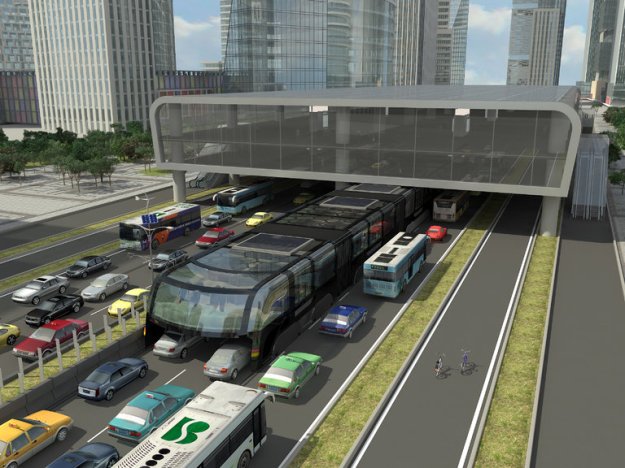 that can use the same I-5 lanes simultaneously with cars. (See the video in the link above.) The Dutch have developed a high-speed electric bus that also can use I-5 at little added cost.
And now comes word that the auction of greenhouse gas (GHG) allowances by the State fell well below forecasts. Due to how HSR is funded out of that allowance fund, HSR’s share will fall by 98% to $2.5 million. Given that the state still has not attracted any private investment, which is a necessity to make this go, it may be time to rethink solutions.
Portugal just ran its entire grid for 107 straight hours on 100% renewables. That’s four and a half days. The country now gets about 48% of its energy from green power.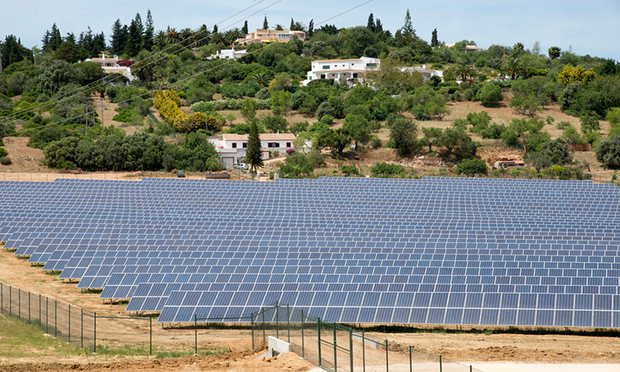
I wrote this column for the Davis Vanguard in a series about the future of economic development for Davis:

The University of California created what Davis is today. When UC Davis became a full-fledged campus in 1959, the State of California began the process of pouring resources into this city to develop a top notch university. UC Davis is now acknowledged as the top agricultural academic institution in the world.
We can see what the university has brought us all around. If you want to imagine what Davis would look like without UCD, go to Woodland or Dixon. We have a vibrant downtown with many community activities. We have one of the top rated school systems in the state. And our property values reflect the premium of those benefits. Davis is a very desirable place because of UCD. You have chosen to live here because of these amenities that cannot be readily found elsewhere in the Central Valley.
State taxpayers have contributed billions of dollars over the years to the campus, and students have brought resources from around the state, keeping the local economy vibrant. In return, the state has not asked Davis explicitly for any contributions or cooperation. Yet there are obligations that come with hosting UCD. Other state residents are counting on UCD, and its host city, to provide an educational gateway to both UC students and concomitant economic and cultural growth statewide.
How do we meet that obligation? By providing a fair share of housing to students, and affordable housing for faculty and staff. By incubating new businesses that spin off innovations developed on campus. And by cooperating with UCD in its long-range plans. Yes, we need to ask reasonable cooperation from the University in return (which does not always come readily. For example, I opposed the final configuration of West Village, and believe part of its difficulties arise from that configuration.) But that does not mean that we can oppose all UCD-related development.
So how does the Nishi Gateway Project relate to this obligation? UCD cannot and should not host all housing and spin offs on campus. Students need to learn how to live on their own outside of the protective UC womb. And UCD should not be directly involved in commercial activity because that puts the state directly in the role of promoting certain profit-making enterprises. Instead, the city needs to host housing and businesses. Other college towns successfully accomplish these tasks.
Davis is the only significant university town without a large research park; this puts UCD at a distinct disadvantage for attracting research dollars and researchers. And UCD is at a disadvantage recruiting faculty. Many assistant and associate professors have spouses working in technical fields, and universities usually help them find jobs as part of recruiting. Davis lags in offering these opportunities. Nishi will create jobs for this younger adult segment, both for incoming faculty’s families and for graduating students. Davis is already experiencing a hollowing out of our young adults population; we need to reverse this trend to keep the town vibrant.
Nishi offers a mix of research and development space and housing close to campus that meets most of our standards for sustainability and impacts. It may not offer the “perfect and optimal” configuration, but no one can ever achieve that standard, simply because that definition varies in the eye of the beholder. Creating affordable housing is about much more than just designating a few units for lower income residents. A constrained housing market guarantees higher prices—just ask San Francisco and Manhattan. The best way to make housing more affordable in Davis is to offer more housing. Nishi does this in the context of a relationship with our biggest employer.
Some suggested that alternative locations exist for this development, that residents will be exposed to excessive pollution, or that we will be losing agricultural land. First, the process of assembling the parcels needed for this scale of project is much more difficult and expensive than opponents realize. Controlling the land is key to success. Second, I have not heard anyone objecting to the new housing developments along Olive Lane, yet they experience the same environmental exposures; the same can be said about much of South and West Davis. And third, farming is no longer economically viable on Nishi. Its isolation makes agricultural activities too expensive—it is time to move on.
Instead, we need to ask if this development is not approved, what will be built instead? We have already seen the type of developments popping up in West Sacramento, Roseville, Elk Grove and even “north North Davis”, i.e., Spring Lake in Woodland. As Davis suppresses growth here, less desirable developments pop up there. Are we really “thinking globally, acting locally” when we close down any new developments by demanding perfection? We cannot return to the bucolic days of the University Farm. Let’s keep real control of our future instead of pushing it off to someone else.
Richard McCann is a member of the City’s Utilities Rates Advisory Committee and Community Choice Energy Advisory Committee. He is a partner in M.Cubed, a small environmental and resources economic consulting firm. His opinions are solely his own and are not endorsed by URAC or CCEAC.
Gregory Mankiw observed how many political standards this year are myths. I don’t agree with all of them, but one particularly jumped out at me. He noted that manufacturing output is up 47% over the last 20 years, but employment is down by 29%. His point is that increased productivity is good and needed to improve our standard of living, and I agree with his presumption.
That would be all fine and good if those gains had rolled through to workers to a significant degree. If all of the gains had gone to labor, wages and benefits should have gone up by 107% over twenty-years–more than double. However, looking at the Bureau of Labor Statistics Employment Cost Index (which includes benefits as well as wages), total wages and benefits rose only 71% over that period. The other 37% accrued to the owners of the manufacturing firms. It’s that shift in the balance of benefits from productivity that is driving political discontent, as I wrote about earlier. Labor’s share of the growing pie is shrinking.
A brief foray into health economics. I saw this posted  on Linked In as showing that new enrollees under the Affordable Care Act were less healthy than previous individual enrollees. It’s clearly a pitch by Blue Cross/Blue Shield to argue that they are overburdened by the new program. Yet a quick glance supports a much more positive view–the new enrollees appear to have similar health conditions as those who get health care through their jobs.
The fear was that the ACA would attract individuals who are much less healthy to the insurance market and costs would skyrocket disproportionately. Instead this shows that these costs shouldn’t rise any more than if more people were employed or under employer-based plans.
It also shows the high level of discrimination that existed in individual plans previously. Only the healthy could get insurance.
This recent study highlighted by FiveThirtyEight may show the way to get around a huge problem in public surveys. With falling numbers of land-line phones, call screening and being overwhelmed by telemarketers, survey firms are increasingly unable to gather representative data from targeted populations. This new technique offers a two-stage method that might get higher response rates. First, use an on-line survey to identify those who might be willing to accept survey calls. That survey could be used to find the baseline characteristics of the survey population. Then second is to make the calls with targeted and/or in-depth questions. This could be a promising answer to an ongoing problem.
All Things Solar and Electric
Musings from M.Cubed on the environment, energy and water
This blog is not necessarily about biking. It's about life that is lived locally, at a human pace.
Energy, Environment and Policy
Musings from M.Cubed on the environment, energy and water
Examining State Authority in Interstate Electricity Markets
Musings from M.Cubed on the environment, energy and water
Musings from M.Cubed on the environment, energy and water
Economic insight and analysis from The Wall Street Journal.
Musings from M.Cubed on the environment, energy and water
Musings from M.Cubed on the environment, energy and water
A few thoughts from John Fleck, a writer of journalism and other things, living in New Mexico
Musings from M.Cubed on the environment, energy and water
Musings from M.Cubed on the environment, energy and water
Musings from M.Cubed on the environment, energy and water
Tips and tricks on programming, evolutionary algorithms, and doing research
Musings from M.Cubed on the environment, energy and water
A blog about water resources and law
Musings from M.Cubed on the environment, energy and water
 Economics Outside the Cube