Author Archives: Richard McCann

Unknown's avatar

About Richard McCann

Partner in M.Cubed, an economics and policy consulting firm.

Using floods to replenish groundwater

ALMOND  ORCHARD FLOODING

M.Cubed produced four reports for Sustainable Conservation on using floodwaters to recharge aquifers in California’s Central Valley. The first is on expected costs. The next three are a set on the benefits, participation incentives and financing options for using floodwaters in wetter years to replenish groundwater aquifers. We found that costs would range around $100 per acre-foot, and beneficiaries include not only local farmers, but also downstream communities with lower flood control costs, upstream water users with more space for storage instead of flood control, increased hydropower generation, and more streamside habitat. We discussed several different approaches to incentives based on our experience in a range of market-based regulatory settings and the water transfer market.

With the PPIC’s release of Water and the Future of the San Joaquin Valley, which forecasts a loss of 500,000 acres of agricultural production due to reduced groundwater pumping under the State Groundwater Management Act (SGMA), local solutions that mitigate groundwater restrictions should be moving to the fore.

Don Cameron at Terranova Ranch started doing this deliberately earlier this decade, and working with Phil Bachand and UC Davis, more study has shown the effectiveness, and the lack of risk to crops, from this strategy. The Department of Water Resources has implemented the Flood-MAR program to explore this alternative further. The Flood-MAR whitepaper explores many of these issues, but its list of beneficiaries is incomplete, and the program appears to not yet moved on to how to effectively implement these programs integrated with the local SGMA plans. Our white papers could be useful starting points for that discussion.

(Image Source: Chico Enterprise-Record)


Reverse auctions for storage gaining favor

power_auction_xl_721_420_80_s_c1

Two recent reports highlight the benefits of using “reverse auctions”. In a reverse auction, the buyer specifies a quantity to be purchased, and sellers bid to provide a portion of that quantity.  An article in Utility Dive summarizes some of the experiences with renewable market auctions.  A separate report in the Review of Environmental Economics and Policy goes further to lay out five guidelines:

  1. Encourage a Large Number of Auction Participants
  2. Limit the Amount of Auctioned Capacity
  3. Leverage Policy Frameworks and Market Structures
  4. Earmark a Portion of Auctioned Capacity for Less-mature Technologies
  5. Balance Penalizing Delivery Failures and Fostering Competition

This policy prescription requires well-informed policy makers balancing different factors–not a task that is well suited to a state legislature. How to develop such a coherent policy can done in two ways. The first is to let the a state commission work through a proceeding to set an overall target and structure. But perhaps a more fruitful approach would be to let local utilities, such as California’s community choice aggregators (CCAs) to set up individual auctions, maybe even setting their own storage targets and then experimenting with different approaches.

California has repeatedly made errors by overly relying on centralized market structures that overcommit or mismatch resource acquisition. This arises because a mistake by a single central buyer is multiplied across all load while a mistake by one buyer within a decentralized market is largely isolated to the load of that one buyer. Without perfect foresight and a distinct lack of mechanisms to appropriately share risk between buyers and sellers, we should be designing an electricity market that mitigates risks to consumers rather than trying to achieve a mythological “optimal” result.

Misunderstanding the Green New Deal

gndbygeneration-img-1440x680

The media and the public appears to have confused the Green Party’s platform calling for 100% renewable energy by 2030 with the goals in the Joint Resolution for a Green New Deal introduced by Senator Edward Markey (D-MA) and Representative Alexandria Ocasio-Cortez (D-NY). The Joint Resolution calls for a “10-year national mobilization,” but contains no deadlines other than zero greenhouse-gas emissions by 2050, which is 30+ years from now. Given that we went from horse and buggies and wood stoves to widespread automobile use and electrification in 30 years at the beginning of the twentieth century, such a transformation doesn’t seem imposing.

Soda tax really works in Berkeley

soda-pop

A just released study on the effects of the Berkeley, California soda tax of one cent per ounce found that soda consumption has fallen 52% over the last four years. That is a remarkable price elasticity. Assuming a 20-ounce bottle costs $1.99, with a tax of 20 cents, that implies a price elasticity of -5. In other words, for every 1% o price increase, demand falls 5%. The study relied on household surveys, which are not always reliable about consumption quantities, so it would be interesting to see actual sales data.

Mismatch in job openings and the unemployed

automation-potential-share

Evidence of how job training is lagging behind job needs. The U.S. Labor Department reported 7.3 million openings, but only 6.3 million people were actively seeking jobs and unemployed. Employers are not able to find the technically-trained individuals that they need for the changing economy. Only a small portion of this shortfall can be met through training in our standard educational institutions. We should be looking for other retraining solutions such as those in Europe.

Who says economists aren’t funny…

Willingness Toupee

norwoodscale

David M. McEvoy, O. Ashton Morgan and John C. Whitehead

No 19-01, Working Papers from Department of Economics, Appalachian State University

Abstract: In this paper we tackle the hairy problem of male pattern baldness. We survey balding men and elicit their willingness to pay to move from their current sad situation to a more plentiful one. Then we comb-over the results. What’s the average willingness to pay to move from a glistening cue ball to a luscious mane? About $30,000.

Key Words: mullet, skullet, comb-over, ducktail, Beatlemania, buzz cut, whiffle, pageboy, attribute non-attendance

The sole reference: Carilli, Anthony M., “Scarcity, Specialization, and Squishees,” Chapter 1 in Homer economicus: The Simpsons and economics. Joshua Hall, ed., Stanford University Press, 2014.

Some sample footnotes:

  1. As is standard in the discipline, author order is determined by reverse Norwood Baldness Scale.
  2. The “stone piece” was a block of dark slate tied around the head to achieve the appearance of a full head of hair. While there are no sources of any such thing actually taking place, the authors imagine that it must have happened.
  3. “In ‘Simpson and Delilah,’ Homer attempts to pursue an executive position in which he doesn’t have a comparative advantage. Mr. Burns confuses Homer with a young go-getter and promotes him to an executive position after Homer has managed to scam himself some Dimoxinil–a miracle cure for baldness–and grow some hair.” (Carilli 2014, p. 11)
  4. It is important to note that the authors did not even bother looking for other studies.

7. Both of these models can be found in the NLogit manual (www.limdep.com) or via Google Scholar. They’re legit but we really don’t want to add any references besides the Simpsons book.

9.Referee #2 may try to claim that you cannot estimate WTP from a mixed logit model with a price parameter distribution that includes negative values because these respondents’ WTP will be undefined. Since distributions that constrain WTP to the positive realm do not perform as well statistically as the normal (we didn’t really check this) and (likely) generate goofy WTP estimates, we choose to present WTP estimated with the mean coefficients. The gullible, er, reasonable, reader will just go along with it since the MXL WTP number is so close to the ECLC WTP estimate and this lends reliability to our data.

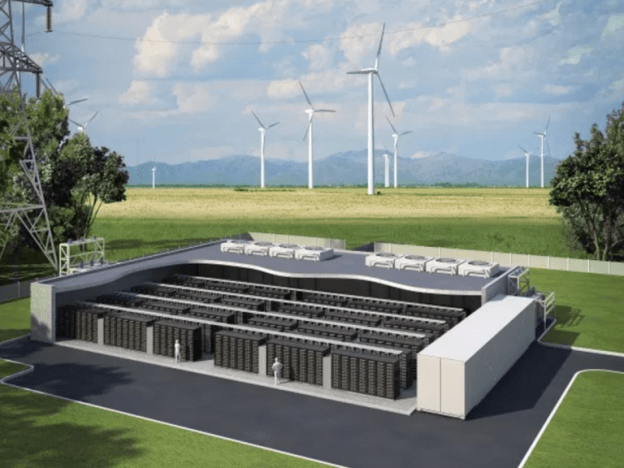
Relying on short term changes diminishes the promise of energy storage

1.-a-typical-lithium-ion-battery-system-nps-768x576

I posted this response on EDF’s blog about energy storage:

This post accepts too easily the conventional industry “wisdom” that the only valid price signals come from short term responses and effects. In general, storage and demand response is likely to lead to increased renewables investment even if in the short run GHG emissions increase. This post hints at that possibility, but it doesn’t make this point explicitly. (The only exception might be increased viability of baseloaded coal plants in the East, but even then I think that the lower cost of renewables is displacing retiring coal.)

We have two facts about the electric grid system that undermine the validity of short-term electricity market functionality and pricing. First, regulatory imperatives to guarantee system reliability causes new capacity to be built prior to any evidence of capacity or energy shortages in the ISO balancing markets. Second, fossil fueled generation is no longer the incremental new resource in much of the U.S. electricity grid. While the ISO energy markets still rely on fossil fueled generation as the “marginal” bidder, these markets are in fact just transmission balancing markets and not sources for meeting new incremental loads. Most of that incremental load is now being met by renewables with near zero operational costs. Those resources do not directly set the short-term prices. Combined with first shortcoming, the total short term price is substantially below the true marginal costs of new resources.

Storage policy and pricing should be set using long-term values and emission changes based on expected resource additions, not on tomorrow’s energy imbalance market price.

So much for nuclear power adding “resilience”

6e0c32214e80ee9f4fbabf2e4ffe6fcd

From Utility Dive: The Salem NGS Unit 2 in New Jersey shutdown due to ice forming in its cooling water intake during the latest polar vortex event.

Coal can’t win even in Texas…

honda-windfarm

Texas generated 30% of its electricity last year with carbon-free resources (mostly wind.) Coals has shrunk over the last decade from 37% to 25%.

PG&E “buys dear, sells cheap”

akuacom_usage

PG&E spends $275 million a year on energy efficiency investments that reduce demand by 100 MW. It also spends $65 million a year on demand response to reduce peak loads by 400 MW.  If we assume that energy efficiency investments are effective an average of 12 years the incremental cost of those investments is $66 per MWH (6.6 cents per kWh). For demand response the incremental cost, which should match the market value, is $163 per kilowatt-year (or $13.60 per kW-month). Both of these values are reasonable investments for long-term resources.

Yet, PG&E argues in the PCIA exit fee proceeding and its annual ERRA generation cost proceeding that the appropriate market valuation for its resources are the short-term fire sale values that it realizes in the daily markets. According to PG&E, customers do not realize any additional value from holding these resources beyond what those resources can be bought and sold for the CAISO markets and in bilateral short-term deals.

So we are left with the obvious question: Why is PG&E continuing to invest in energy efficiency and demand response if the utility states that it can meet all of its needs in the short-term markets? This hypocrisy is probably best explained by PG&E manipulating the regulatory process. PG&E’s proposed “market valuation” sets the exit fee for community choice aggregation (CCA) at a high level. Instead, that market valuation should reflect how much CCAs have saved bundled customers in avoided procurement, and what PG&E pays for adding new resources.