Tag Archives: California

What lessons should we take from the last wave of California utility reform?

h7main2d

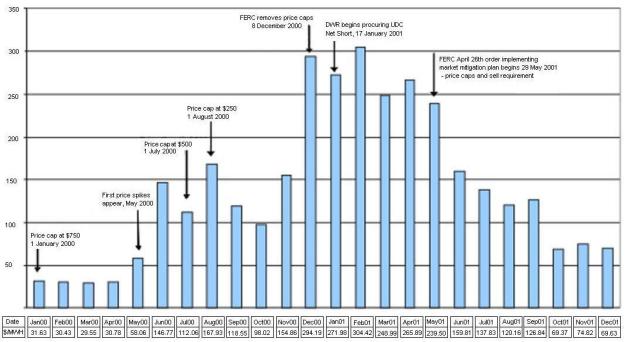
We’re now in the midst of the “third wave” of electricity industry reform in California. The first was in the early 1980s with the rise of independently-owned cogeneration and renewable resources. Mixed with increased energy efficiency, that led to a surplus of power in the late 1990s, which in turn created the push for restructuring and deregulation. Unfortunately, poorly designed markets and other factors precipitated the 2000-01 energy crisis. The rise of renewables and distributed resources is pushing a third wave that may change the industry even more fundamentally.

I wrote a paper in 2002 on how I viewed the history of California’s electricity industry through 2001 and presented this at a conference. (It hasn’t yet been published.) I identify some different factors for why the energy crisis erupted, and what lessons we might learn for this next wave.
 

71% of Health Care Costs in California Are Paid With Public Funds – California Health Report

By Hannah Guzik The majority of health care expenses in California are paid for with public funds, a new study released Wednesday reports. The research counters the popular belief that corporations and individuals bear the brunt of health care costs. Researchers from the UCLA Center for Health Policy Research found that taxpayer dollars will pay […]

Source: Most Health Care Costs in California Are Paid With Public Funds – California Health Report

How to misconstrue statistics in your favor: an example arguing against SB 32


statebystatechangeinco2emissionrateThis blog post on Fox & Hounds is an example of how to take statistics of one cause-and-effect relationship and misapply them to another situation. In this case, this graphic above shows how GHG emissions have dropped dramatically in states that used to burn coal to generate electricity, but now rely much more on natural gas. The decline in coal emissions has occurred over the last half-decade due to the fall in gas prices and the increased stringency in air quality regulations. But more importantly, those states had higher emissions that California to start with because they have been laggards in protecting their environments. The chart shows that these states are finally starting to catch up! If anything, this supports adopting SB 32 as a follow on to AB 32!

Yet the blog post misconstrues this situation to argue that it’s the “free market” that somehow is generating these greater reductions, implying that California and Mississippi had started from the same place–which of course if far from the truth. Yes, the market push from natural gas fracking explains some of this, but California was already so far ahead due to its own efforts that it has less room to improve.

Watch for these types of misrepresentations. Understand the initial premises by the authors. Ask hard questions before you accept their conclusions.

Source: There’s a Better Way :: Fox&Hounds

Will ‘Independence’ from PG&E Bring Cleaner and Cheaper Electricity? | Davis Vanguard

cce-picThis summarizes expected advantages of the Yolo-Davis Community Choice Energy (CCE) and how it will proceed.
By Leanna Sweha City staff briefed the Council at its last meeting on the timeline for the Joint Davis and Yolo County Community Choice Energy (CCE) progra

Source: Will ‘Independence’ from PG&E Bring Cleaner and Cheaper Electricity? | Davis Vanguard

Economic Analysis of the 2016 California Drought for Agriculture | California WaterBlog

by Josué Medellín-Azuara, Duncan MacEwan, Richard E. Howitt, Daniel A. Sumner, and Jay R. Lund The drought continues for California’s agriculture in 2016, but with much less severe and widespread i…

Source: Economic Analysis of the 2016 California Drought for Agriculture | California WaterBlog

CEQA has no effect on California growth

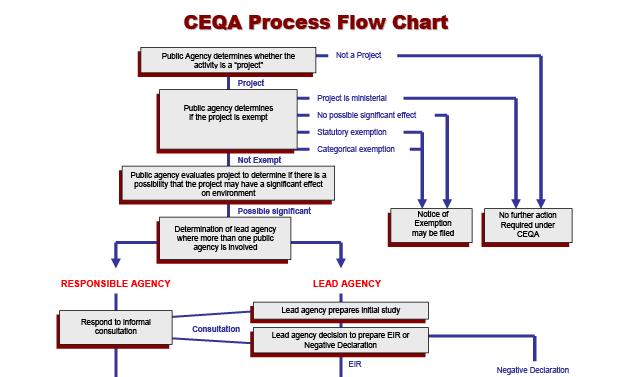
Bay Area Economics conducted a study for the Rose Foundation that found that CEQA regulations have had no appreciable effect on economic growth in California.ceqaprocesssoil_procflow_web_01top-02-02

Here’s a summary of the findings:

The report includes a number of significant findings, including:

  • There is no quantitative evidence that CEQA has a retarding effect on the state’s economic prosperity.
  • Legislative changes to CEQA aimed at streamlining the CEQA process to encourage infill development are working. In San Francisco, only 14 environmental impact reports were prepared in the last three years. In that time, 100 projects proceeded with CEQA exemptions or expedited review.
  • Despite rapid population growth and development, the number of CEQA lawsuits statewide has remained constant over the past 14 years. Between 2013 and 2015, legal challenges were filed in 0.7 percent of projects subject to CEQA review.
  • Less than one percent of projects subject to CEQA review face litigation.
  • Direct costs for complete environmental reviews under CEQA typically range from 0.025% to 0.5% of total development costs.
  • California is the 11th most densely populated state in the nation. Its urban areas compare favorably to cities around the country with regard to the rate of infill vs. greenfield development.
  • The state’s largest cities show ongoing improvement in walkability. California is home to 12 of the nation’s 50 most walkable cities.
  • CEQA does not hamper the development of affordable housing in urban areas. Although the need to provide more affordable housing in California is undisputed, when compared to other states, California produces the second highest number of affordable housing units per 100,000 residents in the nation.

Maven’s Notebook: Fishing groups win lawsuit to overturn Delta water delivery contracts

This could have far reaching implications about how CVP contracts are renewed.

From the law offices of Stephan C. Volker: On July 25, 2016 the Ninth Circuit Court of Appeals ruled in favor of the Pacific Coast Federation of Fishermen’s Associations (“PCFFA”) and the San Fra…

Source: MAVEN’S NOTEBOOK – Water news

Let’s end being NIGO’d in California

920x920

I was struck by the juxtapose of these two items:

  • AquaMetal is building a new environmentally-friendly battery recycling plant near Sparks, NV. They considered California, but “In California, you put in your permit application, and six months later, someone tells you you filled out line 26 wrong.”
  • “(T)he Governor’s Office of Business and Economic Development (GO-Biz) today awarded 23 state officials across various agencies and departments certificates of completion for the Lean 6-Sigma training program administered by GO-Biz which helps streamline permitting and make state government more business friendly.”

California has many progressive and necessary regulations, but the state does an awful job of administering them. Too often, the bureaucrats are too wrapped up in believing the process is actually important. Instead, they should be thinking about how they can ease the permitting and compliance process so that businesses can focus on achieving everyone’s goals.

A bureaucrat should be filling in the missing blanks rather than waiting for months to kick back an application. A friend noted the all too common “NIGO” response–“not in good order.” Being NIGO’d is not conducive to good business.


Why infill commercial development isn’t so common

mip1Davis has not been able to develop larger tracts of land to attract firms working on innovation and partnering with UC Davis. Opponents of several proposed projects have claimed that developers can instead assemble the numerous infill parcels that already exist within city limits to create the needed innovation parks. Now a new study in the leading journal, American Economics Review, finds that in Los Angeles, assembling a group of parcels for such projects faces sale prices 15% to 40% more than a single parcel project. And that doesn’t include the typical per parcel transaction costs that are compounded by multiple purchases. The bottom line is that infill development for larger projects face a high cost premium that must be acknowledged.

Maybe time to look for High Speed Rail alternatives?

High speed rail (HSR) may not be the best means to moving people quickly from San Francisco to Los Angeles–it looks like a 20th century solution to a 21st century problem. I’ve written written about how electric vehicles will diminish the projected GHG emission reductions, and may be an effective alternative. Now comes a Chinese-designed super bus27chinabus01-master768 that can use the same I-5 lanes simultaneously with cars. (See the video in the link above.) The Dutch have developed a high-speed electric bus that also can use I-5 at little added cost.

And now comes word that the auction of greenhouse gas (GHG) allowances by the State fell well below forecasts. Due to how HSR is funded out of that allowance fund, HSR’s share will fall by 98% to $2.5 million. Given that the state still has not attracted any private investment, which is a necessity to make this go, it may be time to rethink solutions.