Tag Archives: solar power

California’s perceived “solar glut” problem is actually a “nuclear glut” problem

Several news stories have asserted that California has a “glut” of solar power that is being wasted and sold at a loss to other states. The problem is that the stories mischaracterize the situation, both in cause and magnitude.

The Diablo Canyon nuclear power units were scheduled to be retired in 2024 and 2025 due to having reached the end of their license and concerns around public safety from the aging plant. As a result, state energy regulators launched an aggressive renewable energy and battery storage procurement process in 2018 following the decision to close Diablo Canyon. Those added resources are now coming online to offset the anticipated loss of energy output from Diablo Canyon’s closure.

However, despite those additional renewable resources, the state legislature and Governor Newsom then extended the life of Diablo Canyon in 2022 to 2030. Diablo Canyon’s 2,200 megawatts of around-the-clock energy production – which adds up to 18 million megawatt hours a year – is the true source of grid management issues, particularly during the spring when the majority of energy curtailments occur.

This imbalance is exacerbated by the large swings in the state’s hydropower production, from 17 million megawatt hours during a dry 2022 to 30 million megawatt hours in a wet 2023. These swings are inherent in California’s power system, and related curtailments were common for decades before solar was on the scene. In other words, California will always need to have excess energy in wet years if it wants sufficient power in the other two-thirds of the years that are average or dry. Diablo Canyon’s year-round, around the clock output only makes that glut worse.

Not only is Diablo Canyon’s extension clogging up transmission lines and driving curtailment, it is also a high cost energy resource. PG&E initially claimed the Diablo Canyon power would cost about 5.5 cent per kilowatt hour, which is near the average cost of the California Independent System Operator’s (CAISO) energy purchases. Instead, PG&E is asking the California Public Utilities Commission to charge more than 9 cents per kilowatt hour, nearly double the cost of the average energy purchase.

Instead of blaming and halting California’s clean energy progress, an easier solution that would solve most of the curtailment issue would be to shut down Diablo Canyon from March to May, when energy demand is lowest in the state. This is when loads are lowest and hydro output the highest. Reducing at least some of Diablo Canyon’s 18 million megawatt hours per year, would more than offset the 3.2 million megawatt hours of solar energy that were curtailed in 2024. Diablo Canyon would still be available to meet summertime peaks. That would save ratepayers money and reduce the need to sell excess generation at a loss. 

California is already addressing other causes of curtailments by installing more storage capacity. It would be foolish to reduce solar generation now when we will need it in the near future to match the additional storage capacity. 

CAISO doesn’t quite grasp what led to rolling blackouts

Steve Berberich, CEO of the California Independent System Operator, assessed for GTM  his views on the reasons for the rolling blackouts in the face of a record setting heat wave. He overlooked a key reason for the delay on capacity procurement (called “resource adequacy” or RA) and he demonstrated a lack of understanding of how renewables and batteries will integrate to provide peak capacity.

Berberich is unwilling to acknowledge that at least part of the RA procurement problem was created by CAISO’s unwillingness to step in as a residual buyer in the RA market, which then created resistance by the CCAs to putting the IOUs in that role. RA procurement was delayed at least a year due to CAISO’s reluctance. CAISO appears to be politically tone-deaf to the issues being raised by CCAs on system procurement.

He says that solar will have to be overbuilt to supply energy to batteries for peak load. But that is already the case with the NQC ELCC just a fraction of the installed solar and wind capacity. Renewable capacity above the ELCC is available to charge the batteries for later use. The only question then is how much energy is required from the batteries to support the peak load and is that coming from existing renewables fleet. The resource adequacy paradigm has changed (more akin to the old PNW hydro system) in which energy, not built capacity is becoming the constraint.

Nuclear vs. storage: which is in our future?

Two articles with contrasting views of the future showed up in Utility Dive this week. The first was an opinion piece by an MIT professor referencing a study he coauthored comparing the costs of an electricity network where renewables supply more than 40% of generation compared to using advanced nuclear power. However, the report’s analysis relied on two key assumptions:

  1. Current battery storage costs are about $300/kW-hr and will remain static into the future.
  2. Current nuclear technology costs about $76 per MWh and advanced nuclear technology can achieve costs of $50 per MWh.

The second article immediately refuted the first assumption in the MIT study. A report from BloombergNEF found that average battery storage prices fell to $156/kW-hr in 2019, and projected further decreases to $100/kW-hr by 2024.

The reason that this price drop is so important is that, as the MIT study pointed out, renewables will be producing excess power at certain times and underproducing during other peak periods. MIT assumes that system operators will have to curtail renewable generation during low load periods and run gas plants to fill in at the peaks. (MIT pointed to California curtailing about 190 GWh in April. However, that added only 0.1% to the CAISO’s total generation cost.) But if storage is so cheap, along with inexpensive solar and wind, additional renewable capacity can be built to store power for the early evening peaks. This could enable us to free ourselves from having to plan for system peak periods and focus largely on energy production.

MIT’s second assumption is not validated by recent experience. As I posted earlier, the about to be completed Vogtle nuclear plant will cost ratepayers in Georgia and South Carolina about $100 per MWh–more than 30% more than the assumption used by MIT. PG&E withdrew its relicensing request for Diablo Canyon because the utility projected the cost to be $100 to $120 per MWh. Another recent study found nuclear costs worldwide exceeded $100/MWh and it takes an average of a decade finish a plant.

Another group at MIT issued a report earlier intended to revive interest in using nuclear power. I’m not sure of why MIT is so focused on this issue and continuing to rely on data and projections that are clearly outdated or wrong, but it does have one of the leading departments in nuclear science and engineering. It’s sad to see that such a prestigious institution is allowing its economic self interest to cloud its vision of the future.

What do you see in the future of relying on renewables? Is it economically feasible to build excess renewable capacity that can supply enough storage to run the system the rest of the day? How would the costs of this system compare to nuclear power at actual current costs? Will advanced nuclear power drop costs by 50%? Let us know your thoughts and add any useful references.

Upfront solar subsidy more cost effective than per kilowatt-hour

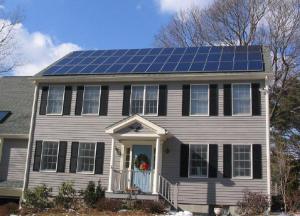
Solar_panels_on_house_roof_winter_view

This paper from the American Economic Review found that consumers use a discount rate in excess of 15% in valuing residential solar power credits, compared to a social-wide discount rate of 3%.  The implication is that a government can incent the same amount of solar investment through an upfront credit for as little as half the cost of a per kilowatt-hour ongoing subsidy.

The California Solar Initiative had two different incentive methods, the Performance Based Incentive (PBI) which was paid out over 5 years and the Expected Performance-Based Buydowns (EPBB) paid out upfront. The former was preferred by policy makers but the latter was more popular with homeowners. Now we know the degree of difference in the preference.

Ahead of the tariff, U.S. imported 3 years worth of solar panels from China

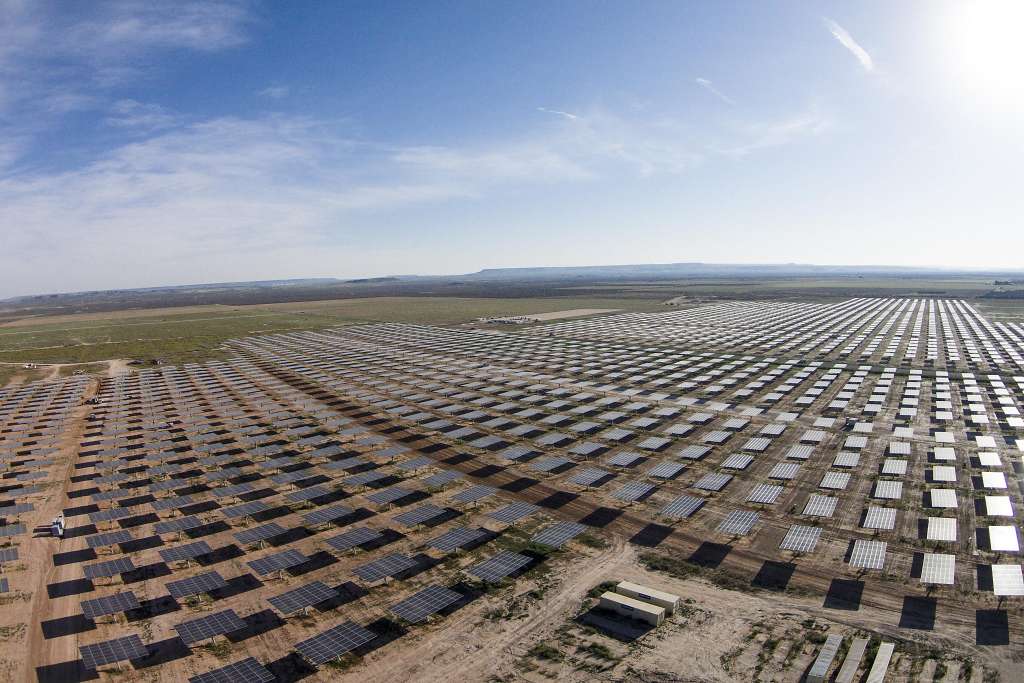
1024x1024Panel imports were up 1,200 percent in fourth quarter 2017. That implies that installers were banking supplies to ride out the import tariff imposed by the Trump Administration. Unfortunately, it also means that the rapid technical and cost progress for panels may stall for that three year period.

Problems with “Residential storage can undercut benefits of rooftop solar, says new study” | (A response to a Utility Dive article)

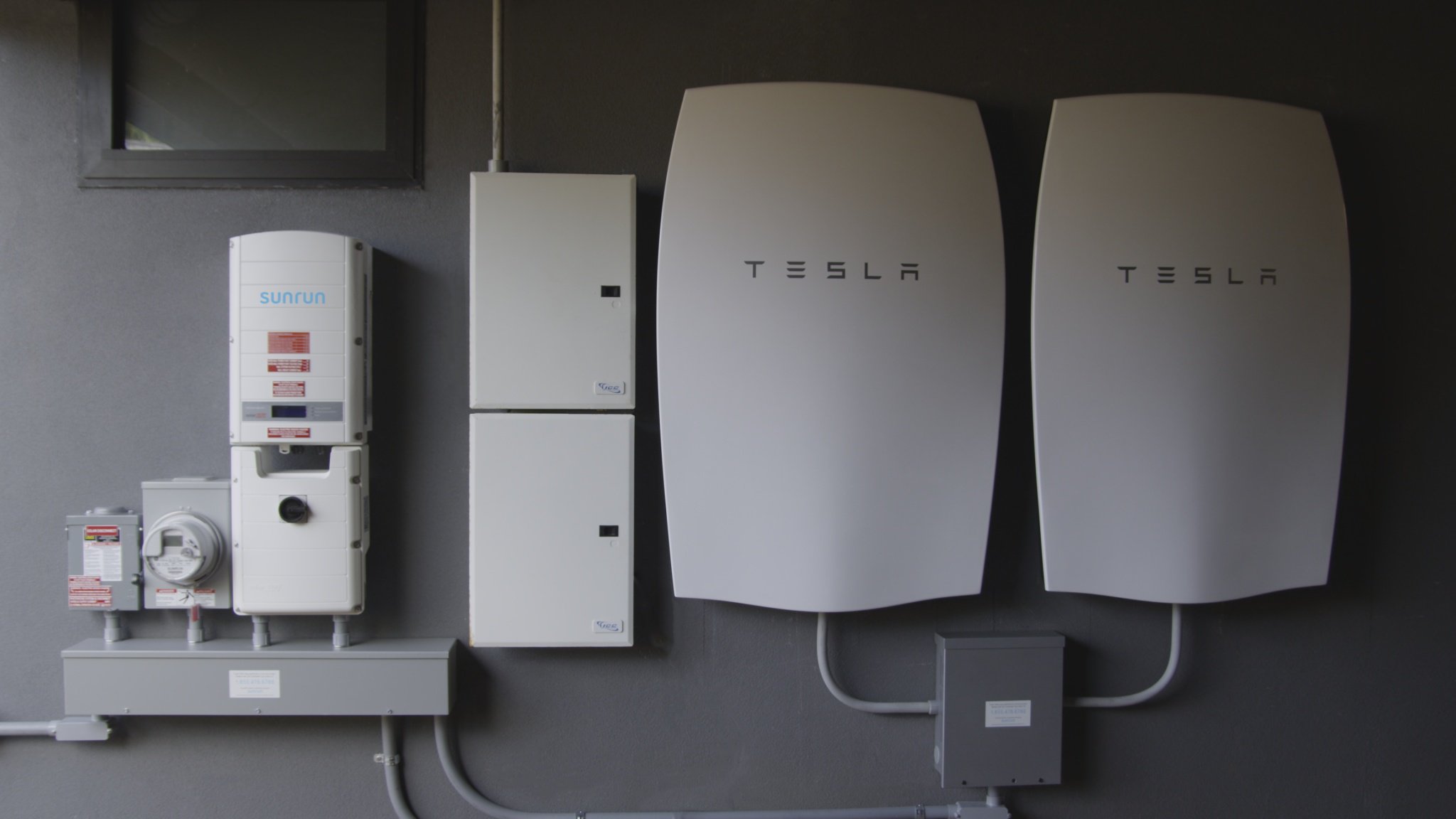
A new study in Nature Energy finds storing rooftop solar can increase emissions and energy consumption.

My thoughts: Here’s the key statement for the finding in this report: “based on today’s Texas grid mix, which is primarily made up of fossil fuels.” If the either the marginal generation on the grid is low or no GHG (e.g., renewables overgeneration which is an increasing problem in California) or the connection to the grid is cut or restricted (e.g., in a microgrid), then this premise doesn’t hold.

This study relies on fossil fueled generation being the marginal energy source. It also focuses solely on operational changes with existing resources. The appropriate frame is looking at the change in generation investment with and without storage, so for example more renewables become cost effective with storage so the overall generation mix changes.

The second problem is that most of the production cost models are yet incapable of capturing reduction in flexible capacity use. That’s why the California Energy Commission has had DNV and LBNL working on modeling those resources. So the emission savings are underestimated.

The third problem is that savings in residual unit commitment (RUC) is underestimated in the models. These are gas units running on standby with no-load, to be available the next day for ramping, load following or reliability. Storage reduces the need for these resources as well. NREL recently released a study on the value of storage that captures this benefit.

If these findings are valid, then the existing Helms pumped storage plant is also increasing GHG emissions. One could go so far as to say that the value of pondage hydropower storage may be so diminished that relicensing conditions that require run of river operations may have little effect on costs and GHG emissions.

Source: Residential storage can undercut benefits of rooftop solar, says new study | Utility Dive

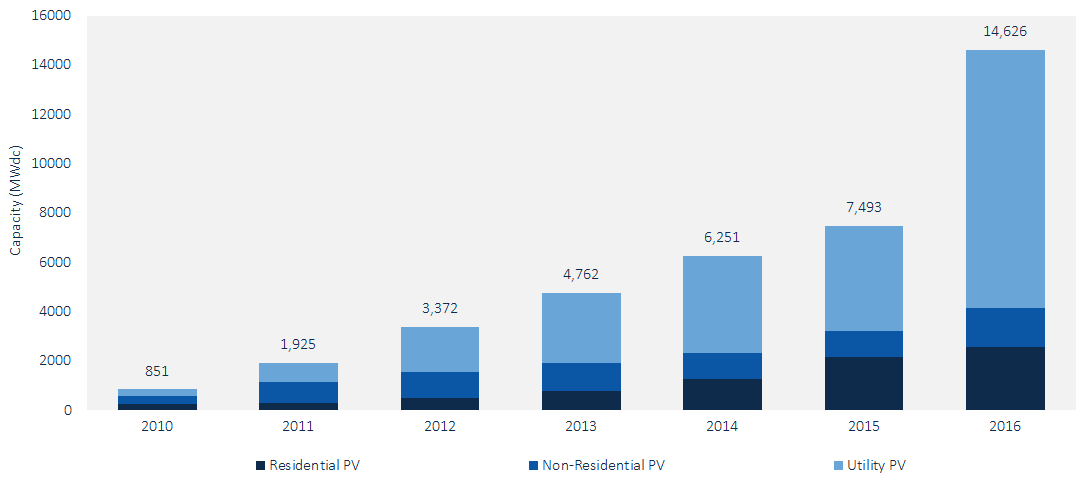
Repost: US Solar Market Grows 95% in 2016, Smashes Records | Greentech Media

GTM Research and SEIA present data from the upcoming U.S. Solar Market Insight report.

Source: US Solar Market Grows 95% in 2016, Smashes Records | Greentech Media

And then this…Trump’s energy plan doesn’t mention solar – The Washington Post

After the release of a study showing solar now employs more than oil, gas and coal combined.

Source: Trump’s energy plan doesn’t mention solar, an industry that just added 51,000 jobs – The Washington Post

Repost: 1 Out of 50 New US Jobs Came From the Solar Industry in 2016 | Greentech Media

Source: 1 Out of 50 New US Jobs Came From the Solar Industry in 2016 | Greentech Media

Repost: NREL-Four reasons 30% wind and solar is technically no big deal | Utility Dive

Many regions are already operating power systems with more renewable energy than previously thought possible, an NREL analyst points out.

Source: Four reasons 30% wind and solar is technically no big deal | Utility Dive